
Next-Generation Boiler Optimization: Leveraging Digital Twins for Process Excellence
June 12, 2026 /
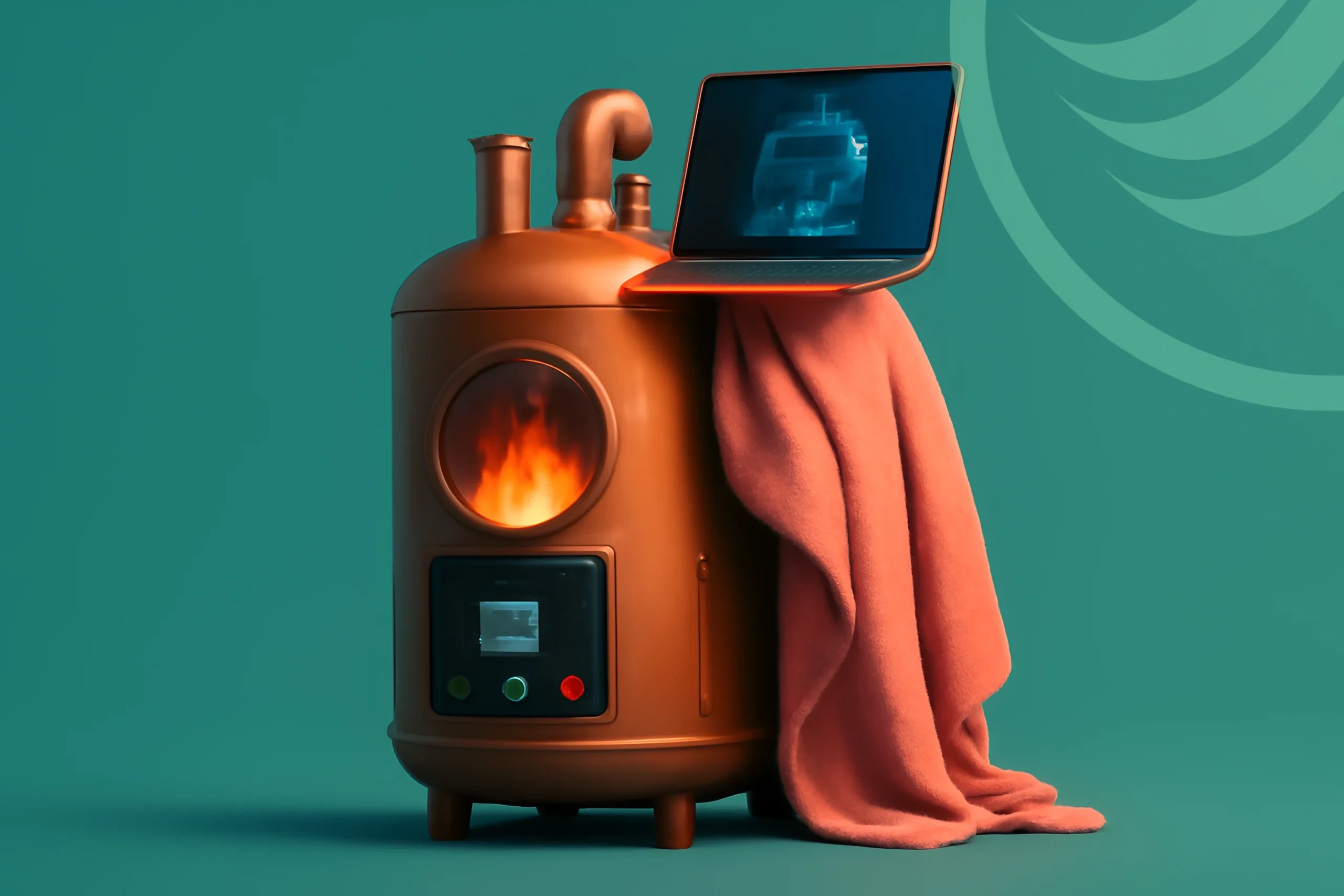
Your boiler is a beast. It’s the roaring heart of your operation—a complex, dynamic system where even the smallest inefficiency bleeds money and compromises environmental targets. You have dashboards, alarms, and spreadsheets, but they only tell you what’s already happened. They are a rearview mirror in a world that demands you see the road ahead.
What if you could see the future? Imagine a perfect, virtual replica of your boiler, living and breathing in a digital space, fed by real-time data from the physical asset. This isn’t science fiction; this is a digital twin. It’s a dynamic simulation that mirrors every pressure fluctuation, temperature shift, and chemical reaction, allowing you to predict problems, test solutions, and optimize performance with zero physical risk.
This is the next frontier of industrial process excellence. We’re moving beyond reactive maintenance and into an era of predictive, simulated optimization. This article explores how digital twins in boiler optimization are revolutionizing plant operations, and why high-fidelity, granular data is the absolute key to unlocking their staggering potential.
The Limits of Conventional Boiler Monitoring: Why We Need More Than Dashboards
The brutal truth is that conventional monitoring systems leave you perpetually on the defensive. They are designed to sound the alarm after a problem has already begun, forcing your team into a reactive scramble. This approach is not just stressful; it’s incredibly expensive, with unplanned downtime costing some industrial manufacturers up to $260,000 per hour, according to GE Digital.
Your control room is likely filled with islands of isolated information. Data from emissions sensors, steam flow meters, and sootblowing systems exist in separate silos, making a holistic view of boiler health nearly impossible. You’re left trying to connect the dots between disparate data logs, a process that is slow, inefficient, and often inconclusive.
Worst of all, there is no safe space to experiment. How do you know the real impact of switching to a new biomass fuel or altering a sootblowing sequence? Testing on a live, multi-million-dollar asset is a high-stakes gamble that no plant manager wants to take. You are forced to rely on historical performance and educated guesses, leaving significant efficiency gains on the table.
What is a Digital Twin? A Dynamic Replica for Your Boiler
A digital twin is far more than a static 3D model. Think of it as a living, evolving counterpart to your physical boiler, a concept that industry leaders like Siemens are using to transform industrial processes. It achieves this through the powerful fusion of several core components working in perfect harmony.
It all begins with Real-Time Data Ingestion. A continuous stream of data from sensors on the physical boiler provides the digital twin with its lifeblood, ensuring the virtual model accurately reflects real-world conditions at every moment. This data feeds into a sophisticated Physics-Based Model, which integrates the fundamental principles of thermodynamics, fluid dynamics, and heat transfer specific to your boiler’s unique design and operational physics.
This is where the predictive magic happens. Machine Learning & AI algorithms analyze this constant flow of data, identifying subtle patterns and correlations invisible to the human eye. They forecast future performance, predict potential failures, and recommend optimizations. Finally, Synchronization & Visualization ensures the virtual model remains perfectly in sync with the real boiler, presenting these complex insights through an intuitive interface, turning raw data into actionable intelligence.
The Foundation of an Effective Digital Twin: High-Fidelity Process Data
A digital twin is a powerful engine, but an engine is useless without high-quality fuel. Its predictive accuracy is entirely dependent on the quality, granularity, and timeliness of the data it receives. A model built on vague or incomplete data will produce vague and unreliable results—a classic case of “garbage in, garbage out.”
This is where generic SCADA systems fall short. To truly model complex phenomena like fouling, slagging, and carryover, a digital twin requires a deeper level of insight. It needs the kind of high-fidelity data from Acospector™ Process Analytics, which provides real-time analysis of fluid composition, particle concentration, and acoustic properties directly from your process lines. This is the granular information that transforms a basic model into a precise, predictive powerhouse.
Furthermore, data from advanced cleaning systems is critical. Information from our HISS® (High Impact Sootblowing System)—such as precise steam consumption and cycle frequency—provides the necessary inputs to model and optimize the entire cleaning process. When combined with alerts from a Carryover Early Warning System, the digital twin has a complete, multi-dimensional view of boiler health. This data-driven approach can boost thermal efficiency by 1-3% and cut cleaning-related steam consumption by up to 50%, as detailed in our comparison of traditional and data-driven sootblowing methods.
Practical Applications: How Digital Twins Drive Process Excellence
When a digital twin is built on a foundation of world-class data, it unlocks transformative capabilities that directly impact your bottom line and operational stability.
Predictive Maintenance for Fouling and Component Health
Forget rigid, time-based cleaning schedules that waste energy and steam. A digital twin enables a shift to true condition-based maintenance. By analyzing high-fidelity data, the twin can accurately predict fouling buildup on specific heat transfer surfaces, triggering an optimized HISS® or Infrasound cleaning cycle at the precise moment it’s needed. This is the essence of predictive maintenance with digital twins, a strategy that moves you from fixing problems to preventing them entirely.
“What-If” Scenario Simulation for Process Optimization
The digital twin provides the safe, virtual sandbox that plant managers have always needed. You can now test hypotheses and explore optimization strategies without risking a single component of your physical boiler. Ask critical questions and get data-backed answers:
- “What is the impact on heat rate and emissions if we switch to a new biomass fuel source?”
- “What is the most energy-efficient sootblowing strategy for our current operational load?”
This capability for industrial process optimization de-risks innovation and empowers you to continuously refine operations for peak performance, a core benefit highlighted by platforms like Cloudworx’s Process Twin Platform.
Advanced Root Cause Analysis
When an unexpected drop in efficiency occurs, the traditional diagnostic process can be a frustrating exercise in chasing symptoms. With a digital twin, you can “rewind” the event and analyze the cascade of changes across every integrated variable. This allows engineers to pinpoint the true root cause in minutes, not days, by correlating data streams that were previously siloed, a key function of advanced industrial data visualization tools.
Real-Time Performance Optimization
The ultimate goal is a self-optimizing system. A mature digital twin can continuously recommend micro-adjustments to operating parameters—like air-to-fuel ratios or sootblowing intensity—to maintain peak efficiency as loads and conditions change. This creates a clear pathway toward advanced boiler management, turning your boiler into a resilient, intelligent asset that actively adapts to its environment.
Conclusion: The Future of Boiler Management is Data-Driven and Predictive
The age of reactive, schedule-based boiler management is coming to an end. Digital twins represent a fundamental paradigm shift, moving the industry from hindsight-driven problem-solving to foresight-driven process excellence. They empower engineers and managers to not only fix problems faster but to prevent them from ever occurring.
However, this powerful future is not built on algorithms alone. The journey to implementing a robust digital twin begins with a non-negotiable foundation of world-class sensing and process analytics. Deep process knowledge, captured through high-fidelity, real-time data, is the absolute prerequisite for success.
By embracing these foundational technologies, industrial plants can unlock unprecedented levels of efficiency, reliability, and sustainability. You can ensure your operations remain competitive, compliant, and resilient in a rapidly evolving energy landscape. The future isn’t just about having data; it’s about putting it to work.
Latest news & articles
Meeting EU Emissions Standards Through Advanced Steam Sootblowing Technologies
The walls are closing in. For plant managers and engineers [...]
Holmen Workington increases sustainable power generation with HISS
Holmen Paper Mill in Workington, UK, identified an opportunity [...]
Interview with Hans Ladum-Poulsen, Heat Management’s newest representative
With many years of experience in the boiler and [...]
Next-Generation Boiler Optimization: Leveraging Digital Twins for Process Excellence
June 12, 2026 /
Your boiler is a beast. It’s the roaring heart of your operation—a complex, dynamic system where even the smallest inefficiency bleeds money and compromises environmental targets. You have dashboards, alarms, and spreadsheets, but they only tell you what’s already happened. They are a rearview mirror in a world that demands you see the road ahead.
What if you could see the future? Imagine a perfect, virtual replica of your boiler, living and breathing in a digital space, fed by real-time data from the physical asset. This isn’t science fiction; this is a digital twin. It’s a dynamic simulation that mirrors every pressure fluctuation, temperature shift, and chemical reaction, allowing you to predict problems, test solutions, and optimize performance with zero physical risk.
This is the next frontier of industrial process excellence. We’re moving beyond reactive maintenance and into an era of predictive, simulated optimization. This article explores how digital twins in boiler optimization are revolutionizing plant operations, and why high-fidelity, granular data is the absolute key to unlocking their staggering potential.
The Limits of Conventional Boiler Monitoring: Why We Need More Than Dashboards
The brutal truth is that conventional monitoring systems leave you perpetually on the defensive. They are designed to sound the alarm after a problem has already begun, forcing your team into a reactive scramble. This approach is not just stressful; it’s incredibly expensive, with unplanned downtime costing some industrial manufacturers up to $260,000 per hour, according to GE Digital.
Your control room is likely filled with islands of isolated information. Data from emissions sensors, steam flow meters, and sootblowing systems exist in separate silos, making a holistic view of boiler health nearly impossible. You’re left trying to connect the dots between disparate data logs, a process that is slow, inefficient, and often inconclusive.
Worst of all, there is no safe space to experiment. How do you know the real impact of switching to a new biomass fuel or altering a sootblowing sequence? Testing on a live, multi-million-dollar asset is a high-stakes gamble that no plant manager wants to take. You are forced to rely on historical performance and educated guesses, leaving significant efficiency gains on the table.
What is a Digital Twin? A Dynamic Replica for Your Boiler
A digital twin is far more than a static 3D model. Think of it as a living, evolving counterpart to your physical boiler, a concept that industry leaders like Siemens are using to transform industrial processes. It achieves this through the powerful fusion of several core components working in perfect harmony.
It all begins with Real-Time Data Ingestion. A continuous stream of data from sensors on the physical boiler provides the digital twin with its lifeblood, ensuring the virtual model accurately reflects real-world conditions at every moment. This data feeds into a sophisticated Physics-Based Model, which integrates the fundamental principles of thermodynamics, fluid dynamics, and heat transfer specific to your boiler’s unique design and operational physics.
This is where the predictive magic happens. Machine Learning & AI algorithms analyze this constant flow of data, identifying subtle patterns and correlations invisible to the human eye. They forecast future performance, predict potential failures, and recommend optimizations. Finally, Synchronization & Visualization ensures the virtual model remains perfectly in sync with the real boiler, presenting these complex insights through an intuitive interface, turning raw data into actionable intelligence.
The Foundation of an Effective Digital Twin: High-Fidelity Process Data
A digital twin is a powerful engine, but an engine is useless without high-quality fuel. Its predictive accuracy is entirely dependent on the quality, granularity, and timeliness of the data it receives. A model built on vague or incomplete data will produce vague and unreliable results—a classic case of “garbage in, garbage out.”
This is where generic SCADA systems fall short. To truly model complex phenomena like fouling, slagging, and carryover, a digital twin requires a deeper level of insight. It needs the kind of high-fidelity data from Acospector™ Process Analytics, which provides real-time analysis of fluid composition, particle concentration, and acoustic properties directly from your process lines. This is the granular information that transforms a basic model into a precise, predictive powerhouse.
Furthermore, data from advanced cleaning systems is critical. Information from our HISS® (High Impact Sootblowing System)—such as precise steam consumption and cycle frequency—provides the necessary inputs to model and optimize the entire cleaning process. When combined with alerts from a Carryover Early Warning System, the digital twin has a complete, multi-dimensional view of boiler health. This data-driven approach can boost thermal efficiency by 1-3% and cut cleaning-related steam consumption by up to 50%, as detailed in our comparison of traditional and data-driven sootblowing methods.
Practical Applications: How Digital Twins Drive Process Excellence
When a digital twin is built on a foundation of world-class data, it unlocks transformative capabilities that directly impact your bottom line and operational stability.
Predictive Maintenance for Fouling and Component Health
Forget rigid, time-based cleaning schedules that waste energy and steam. A digital twin enables a shift to true condition-based maintenance. By analyzing high-fidelity data, the twin can accurately predict fouling buildup on specific heat transfer surfaces, triggering an optimized HISS® or Infrasound cleaning cycle at the precise moment it’s needed. This is the essence of predictive maintenance with digital twins, a strategy that moves you from fixing problems to preventing them entirely.
“What-If” Scenario Simulation for Process Optimization
The digital twin provides the safe, virtual sandbox that plant managers have always needed. You can now test hypotheses and explore optimization strategies without risking a single component of your physical boiler. Ask critical questions and get data-backed answers:
- “What is the impact on heat rate and emissions if we switch to a new biomass fuel source?”
- “What is the most energy-efficient sootblowing strategy for our current operational load?”
This capability for industrial process optimization de-risks innovation and empowers you to continuously refine operations for peak performance, a core benefit highlighted by platforms like Cloudworx’s Process Twin Platform.
Advanced Root Cause Analysis
When an unexpected drop in efficiency occurs, the traditional diagnostic process can be a frustrating exercise in chasing symptoms. With a digital twin, you can “rewind” the event and analyze the cascade of changes across every integrated variable. This allows engineers to pinpoint the true root cause in minutes, not days, by correlating data streams that were previously siloed, a key function of advanced industrial data visualization tools.
Real-Time Performance Optimization
The ultimate goal is a self-optimizing system. A mature digital twin can continuously recommend micro-adjustments to operating parameters—like air-to-fuel ratios or sootblowing intensity—to maintain peak efficiency as loads and conditions change. This creates a clear pathway toward advanced boiler management, turning your boiler into a resilient, intelligent asset that actively adapts to its environment.
Conclusion: The Future of Boiler Management is Data-Driven and Predictive
The age of reactive, schedule-based boiler management is coming to an end. Digital twins represent a fundamental paradigm shift, moving the industry from hindsight-driven problem-solving to foresight-driven process excellence. They empower engineers and managers to not only fix problems faster but to prevent them from ever occurring.
However, this powerful future is not built on algorithms alone. The journey to implementing a robust digital twin begins with a non-negotiable foundation of world-class sensing and process analytics. Deep process knowledge, captured through high-fidelity, real-time data, is the absolute prerequisite for success.
By embracing these foundational technologies, industrial plants can unlock unprecedented levels of efficiency, reliability, and sustainability. You can ensure your operations remain competitive, compliant, and resilient in a rapidly evolving energy landscape. The future isn’t just about having data; it’s about putting it to work.
Latest news & articles
Meeting EU Emissions Standards Through Advanced Steam Sootblowing Technologies
The walls are closing in. For plant managers and engineers [...]
Holmen Workington increases sustainable power generation with HISS
Holmen Paper Mill in Workington, UK, identified an opportunity [...]
Interview with Hans Ladum-Poulsen, Heat Management’s newest representative
With many years of experience in the boiler and [...]