

Leveraging Acospector™ Process Analytics for Predictive Biomass Boiler Maintenance
March 18, 2026 /

The Unique Maintenance Challenges of Biomass-Fired Boilers
To win a fight, you must know your enemy. For biomass plant operators, the enemy is multifaceted, lurking within the very nature of the fuel source. Understanding these specific challenges is the first step toward conquering them.
Fuel Inconsistency and Its Impact
You can’t control the weather, and you can’t always control the exact composition of your biomass fuel. Variations in wood chips, pellets, or agricultural waste introduce a dangerous level of inconsistency. According to industry analysis, fluctuations in moisture content and calorific value can happen not just daily, but hourly, directly impacting combustion stability and ash characteristics. This volatility makes maintaining optimal performance a constant struggle, turning your control room into a command center for a battle you’re always one step behind in.
Aggressive Fouling and Slagging
It gets worse. Biomass fuels are often rich in alkali metals like potassium and sodium, which dramatically lower the melting point of ash. This creates a perfect storm for aggressive fouling and slagging, where molten ash solidifies into hard, insulating deposits on your heat transfer surfaces. These aren’t just minor annoyances; they are efficiency killers that can choke off gas flow, cause tube corrosion, and lead to catastrophic failures. Traditional maintenance often only discovers the severity of this buildup when performance has already plummeted.
The High Cost of “Flying Blind”
Relying on scheduled shutdowns and reactive maintenance is like navigating a minefield with a blindfold. You either clean too often, wasting precious time and resources, or you clean too late, after the damage is done. A comprehensive guide to biomass boiler maintenance highlights the extensive manual checks required, but this approach fails to account for real-time conditions. This “flying blind” method is not just inefficient; it’s a direct threat to your plant’s availability and financial stability, leaving you vulnerable to the very downtime you’re trying to prevent.
Acospector™: Turning Real-Time Process Data into Predictive Power
You cannot manage what you cannot measure. To escape the reactive maintenance trap, you need a new kind of vision—the ability to see inside your process in real-time. This is precisely what Acospector™ Process Analytics was engineered to provide.
What is Acospector™ Process Analytics?
Think of Acospector™ as a stethoscope for your boiler’s critical fluid and gas streams. It is a non-intrusive, real-time monitoring system that uses advanced acoustic analysis to understand the precise dynamics and properties of the process flow. It functions as a powerful early warning system, detecting subtle deviations from your optimal operational baseline long before they escalate into full-blown problems. This isn’t just more data; it’s the right data, delivered at the moment it matters most.
Key Metrics for Biomass Boiler Monitoring
Acospector™ doesn’t just track simple temperature or pressure. It provides deep insight into the metrics that are the true precursors to boiler issues. By monitoring changes in fluid density, particle concentration, and acoustic properties, the system gives you a direct window into the health of your combustion process.
This allows you to connect specific metrics to specific problems. You can now detect the earliest signs of fouling by monitoring changes in flue gas characteristics. You can identify incomplete combustion by analyzing particle carryover. You can even anticipate carryover events before they cause expensive damage to superheaters, a critical capability detailed in our analysis of predictive systems for mitigating boiler carryover risks.
From Raw Data to Actionable Intelligence
Data is useless without interpretation. The true power of Acospector™ lies in its ability to translate a constant stream of complex data into clear, actionable intelligence for your control room operators. The system doesn’t just show you a number; it provides predictive alerts that tell you what is happening, why it’s happening, and what you need to do about it. This transforms your team from reactive problem-solvers into proactive process optimizers.
Implementing a Predictive Maintenance Strategy with Acospector™
Technology alone is not a solution. The real transformation happens when you integrate this new intelligence into a practical, step-by-step strategy that changes how you operate. Here is how you can leverage Acospector™ to build a robust predictive maintenance program.
Step 1: Establishing an Operational Baseline
The journey begins by teaching the system what “normal” looks like for your specific boiler. During periods of clean, efficient operation, Acospector™ captures thousands of data points to create a unique operational fingerprint. This baseline becomes the gold standard against which all future performance is measured, accounting for the unique characteristics of your fuel, your equipment, and your load demands.
Step 2: Real-Time Anomaly Detection
Once the baseline is set, Acospector™ becomes your vigilant watchdog. It continuously compares live process data against the established fingerprint, searching for subtle deviations that signal trouble ahead. These anomalies—a slight change in flue gas density, a minor increase in particulate matter—are the whispers that precede the roar of an unplanned shutdown. By catching these early indicators, you gain the most valuable asset in plant management: time.
Step 3: Integrating with Control and Cleaning Systems
This is where insight becomes action. The predictive alerts from Acospector™ are not meant to be passively observed; they are designed to trigger condition-based actions. This data can be integrated to initiate and optimize cleaning cycles with systems like our HISS® (High Impact Sootblowing System), ensuring you use expensive resources like steam and compressed air only when and where they are truly needed. This data-driven approach moves you from a fixed schedule to a dynamic strategy, a core tenet of modern, efficient boiler management.
The Measurable Impact: ROI for Biomass Plants
Ultimately, any new technology must answer one question: what is the return on investment? For biomass plants, implementing a predictive maintenance strategy with Acospector™ delivers tangible, measurable results that impact everything from uptime to your bottom line.
Maximizing Uptime and Plant Availability
Unplanned downtime is the single greatest threat to profitability. By anticipating and preventing severe fouling and slagging events before they force a shutdown, Acospector™ directly protects your plant’s availability. This shift from reactive to predictive maintenance is a foundational strategy for reducing operational downtime in biomass boilers, ensuring you are generating power and revenue when you are supposed to be.
Reducing Maintenance Costs
Stop wasting money on unnecessary, full-scale cleanings based on a rigid calendar. A predictive strategy allows you to shift to targeted, condition-based interventions. This saves enormous costs on labor, materials, and the wear-and-tear associated with frequent shutdowns. You fix what needs fixing, exactly when it needs fixing, maximizing the efficiency of every maintenance dollar spent.
Enhancing Thermal Efficiency and Fuel Economy
A cleaner boiler is a more efficient boiler. By preventing the insulating layer of soot and slag from building up, you ensure optimal heat transfer at all times. This directly reduces your fuel consumption per megawatt-hour, a critical KPI for any power generation facility. In fact, integrating AI-driven monitoring has been shown to increase operational efficiency by up to 15%, a significant gain that directly impacts fuel economy and profitability.
Supporting ESG and Emissions Reduction Goals
Improved efficiency is not just about cost savings; it’s about sustainability. A more complete and stable combustion process, guided by real-time analytics, leads to a measurable reduction in harmful emissions like CO₂, NOx, and particulate matter. This helps you meet and exceed increasingly strict environmental regulations, strengthening your company’s ESG (Environmental, Social, and Governance) credentials and ensuring your license to operate. This is a key component of achieving EU emissions compliance with advanced boiler optimization.
The Future of Biomass Boiler Management is Predictive
Relying on guesswork, historical data, and reactive schedules is no longer a viable strategy for competitive biomass plants. The inherent volatility of your fuel source demands a more intelligent, more responsive approach. The future of your plant’s reliability, efficiency, and profitability depends on your ability to see what’s coming.
Acospector™ Process Analytics is more than just a monitoring tool; it is a cornerstone technology for intelligent boiler management. It empowers your operators with the foresight needed to move beyond the endless cycle of reaction and repair. It provides the power to achieve new levels of reliability, efficiency, and sustainability, securing your plant’s competitive edge for years to come.
Latest news & articles

Meeting EU Emissions Standards Through Advanced Steam Sootblowing Technologies
The walls are closing in. For plant managers and engineers [...]
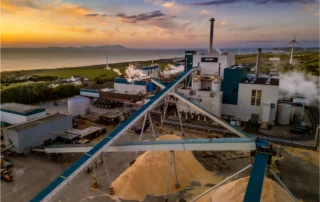
Holmen Workington increases sustainable power generation with HISS
Holmen Paper Mill in Workington, UK, identified an opportunity [...]

Interview with Hans Ladum-Poulsen, Heat Management’s newest representative
With many years of experience in the boiler and [...]
Leveraging Acospector™ Process Analytics for Predictive Biomass Boiler Maintenance
March 18, 2026 /
The Unique Maintenance Challenges of Biomass-Fired Boilers
To win a fight, you must know your enemy. For biomass plant operators, the enemy is multifaceted, lurking within the very nature of the fuel source. Understanding these specific challenges is the first step toward conquering them.
Fuel Inconsistency and Its Impact
You can’t control the weather, and you can’t always control the exact composition of your biomass fuel. Variations in wood chips, pellets, or agricultural waste introduce a dangerous level of inconsistency. According to industry analysis, fluctuations in moisture content and calorific value can happen not just daily, but hourly, directly impacting combustion stability and ash characteristics. This volatility makes maintaining optimal performance a constant struggle, turning your control room into a command center for a battle you’re always one step behind in.
Aggressive Fouling and Slagging
It gets worse. Biomass fuels are often rich in alkali metals like potassium and sodium, which dramatically lower the melting point of ash. This creates a perfect storm for aggressive fouling and slagging, where molten ash solidifies into hard, insulating deposits on your heat transfer surfaces. These aren’t just minor annoyances; they are efficiency killers that can choke off gas flow, cause tube corrosion, and lead to catastrophic failures. Traditional maintenance often only discovers the severity of this buildup when performance has already plummeted.
The High Cost of “Flying Blind”
Relying on scheduled shutdowns and reactive maintenance is like navigating a minefield with a blindfold. You either clean too often, wasting precious time and resources, or you clean too late, after the damage is done. A comprehensive guide to biomass boiler maintenance highlights the extensive manual checks required, but this approach fails to account for real-time conditions. This “flying blind” method is not just inefficient; it’s a direct threat to your plant’s availability and financial stability, leaving you vulnerable to the very downtime you’re trying to prevent.
Acospector™: Turning Real-Time Process Data into Predictive Power
You cannot manage what you cannot measure. To escape the reactive maintenance trap, you need a new kind of vision—the ability to see inside your process in real-time. This is precisely what Acospector™ Process Analytics was engineered to provide.
What is Acospector™ Process Analytics?
Think of Acospector™ as a stethoscope for your boiler’s critical fluid and gas streams. It is a non-intrusive, real-time monitoring system that uses advanced acoustic analysis to understand the precise dynamics and properties of the process flow. It functions as a powerful early warning system, detecting subtle deviations from your optimal operational baseline long before they escalate into full-blown problems. This isn’t just more data; it’s the right data, delivered at the moment it matters most.
Key Metrics for Biomass Boiler Monitoring
Acospector™ doesn’t just track simple temperature or pressure. It provides deep insight into the metrics that are the true precursors to boiler issues. By monitoring changes in fluid density, particle concentration, and acoustic properties, the system gives you a direct window into the health of your combustion process.
This allows you to connect specific metrics to specific problems. You can now detect the earliest signs of fouling by monitoring changes in flue gas characteristics. You can identify incomplete combustion by analyzing particle carryover. You can even anticipate carryover events before they cause expensive damage to superheaters, a critical capability detailed in our analysis of predictive systems for mitigating boiler carryover risks.
From Raw Data to Actionable Intelligence
Data is useless without interpretation. The true power of Acospector™ lies in its ability to translate a constant stream of complex data into clear, actionable intelligence for your control room operators. The system doesn’t just show you a number; it provides predictive alerts that tell you what is happening, why it’s happening, and what you need to do about it. This transforms your team from reactive problem-solvers into proactive process optimizers.
Implementing a Predictive Maintenance Strategy with Acospector™
Technology alone is not a solution. The real transformation happens when you integrate this new intelligence into a practical, step-by-step strategy that changes how you operate. Here is how you can leverage Acospector™ to build a robust predictive maintenance program.
Step 1: Establishing an Operational Baseline
The journey begins by teaching the system what “normal” looks like for your specific boiler. During periods of clean, efficient operation, Acospector™ captures thousands of data points to create a unique operational fingerprint. This baseline becomes the gold standard against which all future performance is measured, accounting for the unique characteristics of your fuel, your equipment, and your load demands.
Step 2: Real-Time Anomaly Detection
Once the baseline is set, Acospector™ becomes your vigilant watchdog. It continuously compares live process data against the established fingerprint, searching for subtle deviations that signal trouble ahead. These anomalies—a slight change in flue gas density, a minor increase in particulate matter—are the whispers that precede the roar of an unplanned shutdown. By catching these early indicators, you gain the most valuable asset in plant management: time.
Step 3: Integrating with Control and Cleaning Systems
This is where insight becomes action. The predictive alerts from Acospector™ are not meant to be passively observed; they are designed to trigger condition-based actions. This data can be integrated to initiate and optimize cleaning cycles with systems like our HISS® (High Impact Sootblowing System), ensuring you use expensive resources like steam and compressed air only when and where they are truly needed. This data-driven approach moves you from a fixed schedule to a dynamic strategy, a core tenet of modern, efficient boiler management.
The Measurable Impact: ROI for Biomass Plants
Ultimately, any new technology must answer one question: what is the return on investment? For biomass plants, implementing a predictive maintenance strategy with Acospector™ delivers tangible, measurable results that impact everything from uptime to your bottom line.
Maximizing Uptime and Plant Availability
Unplanned downtime is the single greatest threat to profitability. By anticipating and preventing severe fouling and slagging events before they force a shutdown, Acospector™ directly protects your plant’s availability. This shift from reactive to predictive maintenance is a foundational strategy for reducing operational downtime in biomass boilers, ensuring you are generating power and revenue when you are supposed to be.
Reducing Maintenance Costs
Stop wasting money on unnecessary, full-scale cleanings based on a rigid calendar. A predictive strategy allows you to shift to targeted, condition-based interventions. This saves enormous costs on labor, materials, and the wear-and-tear associated with frequent shutdowns. You fix what needs fixing, exactly when it needs fixing, maximizing the efficiency of every maintenance dollar spent.
Enhancing Thermal Efficiency and Fuel Economy
A cleaner boiler is a more efficient boiler. By preventing the insulating layer of soot and slag from building up, you ensure optimal heat transfer at all times. This directly reduces your fuel consumption per megawatt-hour, a critical KPI for any power generation facility. In fact, integrating AI-driven monitoring has been shown to increase operational efficiency by up to 15%, a significant gain that directly impacts fuel economy and profitability.
Supporting ESG and Emissions Reduction Goals
Improved efficiency is not just about cost savings; it’s about sustainability. A more complete and stable combustion process, guided by real-time analytics, leads to a measurable reduction in harmful emissions like CO₂, NOx, and particulate matter. This helps you meet and exceed increasingly strict environmental regulations, strengthening your company’s ESG (Environmental, Social, and Governance) credentials and ensuring your license to operate. This is a key component of achieving EU emissions compliance with advanced boiler optimization.
The Future of Biomass Boiler Management is Predictive
Relying on guesswork, historical data, and reactive schedules is no longer a viable strategy for competitive biomass plants. The inherent volatility of your fuel source demands a more intelligent, more responsive approach. The future of your plant’s reliability, efficiency, and profitability depends on your ability to see what’s coming.
Acospector™ Process Analytics is more than just a monitoring tool; it is a cornerstone technology for intelligent boiler management. It empowers your operators with the foresight needed to move beyond the endless cycle of reaction and repair. It provides the power to achieve new levels of reliability, efficiency, and sustainability, securing your plant’s competitive edge for years to come.
Latest news & articles
Meeting EU Emissions Standards Through Advanced Steam Sootblowing Technologies
The walls are closing in. For plant managers and engineers [...]
Holmen Workington increases sustainable power generation with HISS
Holmen Paper Mill in Workington, UK, identified an opportunity [...]
Interview with Hans Ladum-Poulsen, Heat Management’s newest representative
With many years of experience in the boiler and [...]