
Implementing Infrasound Cleaning for Industrial Boilers: A Comprehensive How-To
December 2, 2025 /

Are you tired of fighting a losing battle against boiler fouling? That relentless buildup of soot and ash that chokes your heat transfer surfaces, drives up fuel consumption, and forces you into costly, unplanned shutdowns. It’s a constant war of attrition that cripples efficiency and eats into your bottom line.
For decades, the standard response has been reactive and often brutal. You blast your tubes with high-pressure steam, inducing thermal stress and erosion that shortens their lifespan. Or you halt production entirely for dangerous, time-consuming manual cleaning. These aren’t solutions; they are costly compromises that treat the symptom, never the cause.
But what if you could stop the problem before it even starts? This is the paradigm shift offered by infrasound cleaning—a non-intrusive, preventative technology that maintains peak boiler performance from within. This guide is your engineering roadmap, a step-by-step walkthrough for implementing an infrasound cleaning system and shifting your plant from reactive maintenance to proactive, predictable efficiency.
Foundational Principles: Why Infrasound Technology is a Game-Changer
The science behind infrasound cleaning is both elegant and powerful. The system generates low-frequency acoustic waves, typically below 20 Hz, that are imperceptible to the human ear but create a resonating vibration throughout the entire boiler. This subtle, pervasive energy prevents fine ash and soot particles from sintering together and adhering to heat transfer surfaces, keeping them in a fluidized state to be carried away with the flue gas.
This preventative approach offers a cascade of advantages over traditional methods. Unlike steam sootblowing, which attacks hardened deposits, infrasound cleaning is a continuous or frequent process that ensures those deposits never form. According to detailed technical documentation, this preventative maintenance strategy can lead to a payback period of just 6 to 24 months by improving boiler efficiency and ensuring stable operation. It’s the difference between constantly scrubbing a burnt pan and using a non-stick surface in the first place.
Furthermore, the very nature of sound waves provides benefits that physical cleaning methods cannot match. The low-frequency waves are omni-directional, reaching deep into tube banks and corners that are inaccessible to directional sootblowers. This complete coverage ensures uniform cleanliness across all surfaces. And because the energy is low, there is zero risk of thermal shock or mechanical erosion, which helps extend the lifetime of your critical boiler components and protects your long-term investment.
The Implementation Roadmap: A 5-Step Guide to System Integration
Transitioning to an infrasound cleaning system is a structured engineering project, not a simple equipment purchase. It requires a methodical approach to ensure the technology is perfectly tailored to your boiler’s unique operational fingerprint. Here is the five-step roadmap our engineers follow to guarantee success.
Step 1: Comprehensive Boiler Assessment & Fouling Analysis
You can’t solve a problem you don’t fully understand. The first step is a deep dive into your boiler’s design, fuel type, historical fouling patterns, and flue gas dynamics. We analyze everything from past maintenance logs to thermal imaging data to build a complete picture of your specific challenges, whether you’re running a recovery boiler or a biomass plant with its own unique fouling characteristics.
With this data in hand, we work with your team to establish clear, measurable objectives. Are you aiming to reduce the flue gas exit temperature by a specific percentage? Do you need to extend the time between manual cleanings from six months to twelve? Defining these goals upfront transforms the project from a technical installation into a strategic investment with a clear ROI.
This initial analysis is the foundation for the entire project. It ensures that the final system is not a one-size-fits-all solution, but a precisely engineered tool designed to solve your most persistent operational headaches. It’s about replacing guesswork with data-driven certainty.
Step 2: Custom System Design & Engineering
Once the assessment is complete, the engineering phase begins. This is where science meets practical application, using advanced acoustic modeling to design a system optimized for your boiler’s geometry. As academic studies confirm, the optimal placement and frequency of infrasound emitters are critical for creating a resonant field that covers every critical surface.
Our engineers determine the ideal number and location of infrasound emitters, or horns, to be installed. They then program the specific operating frequencies and activation sequences required to target the unique properties of your ash. Different particle sizes and chemical compositions respond to different frequencies, so this custom programming is essential for maximum cleaning efficiency.
This bespoke design process ensures that the acoustic energy is directed precisely where it’s needed most. It prevents dead spots where fouling could begin and guarantees that the entire system works in harmony with your boiler’s natural gas flow, enhancing performance without disrupting operations.
Step 3: Installation & Mechanical Integration
With the engineering blueprint finalized, the physical installation can proceed. One of the key advantages of infrasound technology is its minimal structural impact. The emitters are typically mounted on existing manholes, inspection hatches, or dedicated flanges welded onto the boiler walls, requiring little to no modification of pressure parts.
The system is then connected to the plant’s existing infrastructure. The emitters are powered by the standard compressed air supply, and the control panel is connected to your electrical grid. As outlined in our technical fact sheets, the energy consumption is remarkably low, as the system operates in short, intermittent bursts, making it a highly efficient solution.
This streamlined integration process minimizes downtime and disruption. The goal is to make the transition seamless, integrating a powerful new capability into your plant without interrupting its essential rhythm.
Step 4: Commissioning & System Calibration
Once installed, the system is brought to life through a meticulous commissioning and calibration process. Initial startup involves a series of diagnostic checks to ensure all mechanical and electrical components are functioning perfectly. The first activation sequences are then run under careful observation.
This is not a “set it and forget it” process. Our engineers use real-time boiler data to fine-tune the system for peak performance. By monitoring key metrics like differential pressure and flue gas temperatures, they can adjust the operating frequencies and cycle times to achieve the most effective cleaning with the least amount of energy. This data-driven approach to infrasound cleaning is what separates a good installation from a great one.
This calibration phase ensures that the system is perfectly synchronized with your boiler’s operational state. It adapts the technology to the reality of your daily production, guaranteeing that you get the maximum possible benefit from day one.
Step 5: Control System Integration & Operator Training
The final step is to fully integrate the infrasound system into your plant’s operational workflow. The system’s control panel is connected to your main Distributed Control System (DCS) or SCADA, allowing for fully automated operation, monitoring, and data logging. This integration puts complete control at your fingertips, making the system a seamless part of your overall process management.
A technology is only as effective as the team that operates it. We provide comprehensive training for your plant operators and maintenance engineers, covering everything from routine operation and performance monitoring to basic troubleshooting. This knowledge transfer empowers your team to take full ownership of the system and maximize its long-term value.
With the system fully automated and your team fully trained, the implementation is complete. Your boiler is now equipped with a proactive defense against fouling, ready to deliver a new level of efficiency, reliability, and uptime.
Measuring Impact: KPIs for Evaluating Infrasound Cleaning Performance
How do you know the investment is paying off? The success of an infrasound cleaning system is not a matter of opinion; it is measured through cold, hard data. By tracking a few Key Performance Indicators (KPIs), you can quantify the system’s impact on your operations and calculate its direct contribution to your bottom line.
The most critical KPIs provide a clear window into your boiler’s health and efficiency.
- Heat Transfer Coefficient: A stable or improving coefficient is direct proof of cleaner surfaces and is fundamental to maximizing heat transfer efficiency.
- Flue Gas Exit Temperature: A lower, more stable exit temperature indicates that more heat is being absorbed by the boiler, not wasted up the stack.
- Differential Pressure (dP): Consistent dP readings across boiler sections show that gas paths remain clear and unobstructed, preventing costly draft limitations.
- Reduced Steam Sootblower Usage: Tracking the reduction in steam consumption provides a direct, quantifiable operational saving.
- Extended Time Between Shutdowns: The ultimate metric of success is a significant increase in campaign length, translating directly to more production and revenue.
These metrics, often monitored through advanced tools like our Acospector™ Process Analytics platform, provide the undeniable proof of performance. They transform the benefits of infrasound cleaning from abstract concepts into concrete figures on your plant’s performance reports.
Conclusion: The Strategic Value of Proactive Boiler Maintenance
We’ve walked the path from assessment to implementation, from identifying the chronic pain of fouling to calibrating a permanent, proactive solution. Implementing an infrasound cleaning system is far more than installing a new piece of equipment; it is a strategic upgrade to your entire maintenance philosophy. It’s a commitment to efficiency, reliability, and long-term profitability.
This technology is a cornerstone of modern, sustainable plant operations. By reducing fuel consumption, eliminating the need for steam sootblowing, and extending the life of your assets, it directly contributes to your financial and environmental goals. The growing market adoption, evidenced by a record number of orders for infrasound systems in 2023, confirms that industry leaders are embracing this proactive approach.
You no longer have to accept fouling as an unavoidable cost of doing business. You can choose a smarter, more efficient path forward.
To see how our infrasound technology has been implemented in plants similar to yours, explore our library of case studies and articles.
Have a specific fouling challenge you need to solve? Contact our engineering team for a technical assessment of your boiler.
Latest news & articles

Meeting EU Emissions Standards Through Advanced Steam Sootblowing Technologies
The walls are closing in. For plant managers and engineers [...]
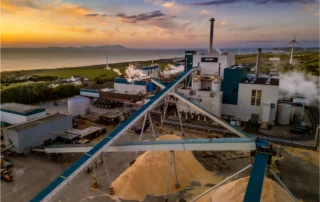
Holmen Workington increases sustainable power generation with HISS
Holmen Paper Mill in Workington, UK, identified an opportunity [...]

Interview with Hans Ladum-Poulsen, Heat Management’s newest representative
With many years of experience in the boiler and [...]
Implementing Infrasound Cleaning for Industrial Boilers: A Comprehensive How-To
December 2, 2025 /
Are you tired of fighting a losing battle against boiler fouling? That relentless buildup of soot and ash that chokes your heat transfer surfaces, drives up fuel consumption, and forces you into costly, unplanned shutdowns. It’s a constant war of attrition that cripples efficiency and eats into your bottom line.
For decades, the standard response has been reactive and often brutal. You blast your tubes with high-pressure steam, inducing thermal stress and erosion that shortens their lifespan. Or you halt production entirely for dangerous, time-consuming manual cleaning. These aren’t solutions; they are costly compromises that treat the symptom, never the cause.
But what if you could stop the problem before it even starts? This is the paradigm shift offered by infrasound cleaning—a non-intrusive, preventative technology that maintains peak boiler performance from within. This guide is your engineering roadmap, a step-by-step walkthrough for implementing an infrasound cleaning system and shifting your plant from reactive maintenance to proactive, predictable efficiency.
Foundational Principles: Why Infrasound Technology is a Game-Changer
The science behind infrasound cleaning is both elegant and powerful. The system generates low-frequency acoustic waves, typically below 20 Hz, that are imperceptible to the human ear but create a resonating vibration throughout the entire boiler. This subtle, pervasive energy prevents fine ash and soot particles from sintering together and adhering to heat transfer surfaces, keeping them in a fluidized state to be carried away with the flue gas.
This preventative approach offers a cascade of advantages over traditional methods. Unlike steam sootblowing, which attacks hardened deposits, infrasound cleaning is a continuous or frequent process that ensures those deposits never form. According to detailed technical documentation, this preventative maintenance strategy can lead to a payback period of just 6 to 24 months by improving boiler efficiency and ensuring stable operation. It’s the difference between constantly scrubbing a burnt pan and using a non-stick surface in the first place.
Furthermore, the very nature of sound waves provides benefits that physical cleaning methods cannot match. The low-frequency waves are omni-directional, reaching deep into tube banks and corners that are inaccessible to directional sootblowers. This complete coverage ensures uniform cleanliness across all surfaces. And because the energy is low, there is zero risk of thermal shock or mechanical erosion, which helps extend the lifetime of your critical boiler components and protects your long-term investment.
The Implementation Roadmap: A 5-Step Guide to System Integration
Transitioning to an infrasound cleaning system is a structured engineering project, not a simple equipment purchase. It requires a methodical approach to ensure the technology is perfectly tailored to your boiler’s unique operational fingerprint. Here is the five-step roadmap our engineers follow to guarantee success.
Step 1: Comprehensive Boiler Assessment & Fouling Analysis
You can’t solve a problem you don’t fully understand. The first step is a deep dive into your boiler’s design, fuel type, historical fouling patterns, and flue gas dynamics. We analyze everything from past maintenance logs to thermal imaging data to build a complete picture of your specific challenges, whether you’re running a recovery boiler or a biomass plant with its own unique fouling characteristics.
With this data in hand, we work with your team to establish clear, measurable objectives. Are you aiming to reduce the flue gas exit temperature by a specific percentage? Do you need to extend the time between manual cleanings from six months to twelve? Defining these goals upfront transforms the project from a technical installation into a strategic investment with a clear ROI.
This initial analysis is the foundation for the entire project. It ensures that the final system is not a one-size-fits-all solution, but a precisely engineered tool designed to solve your most persistent operational headaches. It’s about replacing guesswork with data-driven certainty.
Step 2: Custom System Design & Engineering
Once the assessment is complete, the engineering phase begins. This is where science meets practical application, using advanced acoustic modeling to design a system optimized for your boiler’s geometry. As academic studies confirm, the optimal placement and frequency of infrasound emitters are critical for creating a resonant field that covers every critical surface.
Our engineers determine the ideal number and location of infrasound emitters, or horns, to be installed. They then program the specific operating frequencies and activation sequences required to target the unique properties of your ash. Different particle sizes and chemical compositions respond to different frequencies, so this custom programming is essential for maximum cleaning efficiency.
This bespoke design process ensures that the acoustic energy is directed precisely where it’s needed most. It prevents dead spots where fouling could begin and guarantees that the entire system works in harmony with your boiler’s natural gas flow, enhancing performance without disrupting operations.
Step 3: Installation & Mechanical Integration
With the engineering blueprint finalized, the physical installation can proceed. One of the key advantages of infrasound technology is its minimal structural impact. The emitters are typically mounted on existing manholes, inspection hatches, or dedicated flanges welded onto the boiler walls, requiring little to no modification of pressure parts.
The system is then connected to the plant’s existing infrastructure. The emitters are powered by the standard compressed air supply, and the control panel is connected to your electrical grid. As outlined in our technical fact sheets, the energy consumption is remarkably low, as the system operates in short, intermittent bursts, making it a highly efficient solution.
This streamlined integration process minimizes downtime and disruption. The goal is to make the transition seamless, integrating a powerful new capability into your plant without interrupting its essential rhythm.
Step 4: Commissioning & System Calibration
Once installed, the system is brought to life through a meticulous commissioning and calibration process. Initial startup involves a series of diagnostic checks to ensure all mechanical and electrical components are functioning perfectly. The first activation sequences are then run under careful observation.
This is not a “set it and forget it” process. Our engineers use real-time boiler data to fine-tune the system for peak performance. By monitoring key metrics like differential pressure and flue gas temperatures, they can adjust the operating frequencies and cycle times to achieve the most effective cleaning with the least amount of energy. This data-driven approach to infrasound cleaning is what separates a good installation from a great one.
This calibration phase ensures that the system is perfectly synchronized with your boiler’s operational state. It adapts the technology to the reality of your daily production, guaranteeing that you get the maximum possible benefit from day one.
Step 5: Control System Integration & Operator Training
The final step is to fully integrate the infrasound system into your plant’s operational workflow. The system’s control panel is connected to your main Distributed Control System (DCS) or SCADA, allowing for fully automated operation, monitoring, and data logging. This integration puts complete control at your fingertips, making the system a seamless part of your overall process management.
A technology is only as effective as the team that operates it. We provide comprehensive training for your plant operators and maintenance engineers, covering everything from routine operation and performance monitoring to basic troubleshooting. This knowledge transfer empowers your team to take full ownership of the system and maximize its long-term value.
With the system fully automated and your team fully trained, the implementation is complete. Your boiler is now equipped with a proactive defense against fouling, ready to deliver a new level of efficiency, reliability, and uptime.
Measuring Impact: KPIs for Evaluating Infrasound Cleaning Performance
How do you know the investment is paying off? The success of an infrasound cleaning system is not a matter of opinion; it is measured through cold, hard data. By tracking a few Key Performance Indicators (KPIs), you can quantify the system’s impact on your operations and calculate its direct contribution to your bottom line.
The most critical KPIs provide a clear window into your boiler’s health and efficiency.
- Heat Transfer Coefficient: A stable or improving coefficient is direct proof of cleaner surfaces and is fundamental to maximizing heat transfer efficiency.
- Flue Gas Exit Temperature: A lower, more stable exit temperature indicates that more heat is being absorbed by the boiler, not wasted up the stack.
- Differential Pressure (dP): Consistent dP readings across boiler sections show that gas paths remain clear and unobstructed, preventing costly draft limitations.
- Reduced Steam Sootblower Usage: Tracking the reduction in steam consumption provides a direct, quantifiable operational saving.
- Extended Time Between Shutdowns: The ultimate metric of success is a significant increase in campaign length, translating directly to more production and revenue.
These metrics, often monitored through advanced tools like our Acospector™ Process Analytics platform, provide the undeniable proof of performance. They transform the benefits of infrasound cleaning from abstract concepts into concrete figures on your plant’s performance reports.
Conclusion: The Strategic Value of Proactive Boiler Maintenance
We’ve walked the path from assessment to implementation, from identifying the chronic pain of fouling to calibrating a permanent, proactive solution. Implementing an infrasound cleaning system is far more than installing a new piece of equipment; it is a strategic upgrade to your entire maintenance philosophy. It’s a commitment to efficiency, reliability, and long-term profitability.
This technology is a cornerstone of modern, sustainable plant operations. By reducing fuel consumption, eliminating the need for steam sootblowing, and extending the life of your assets, it directly contributes to your financial and environmental goals. The growing market adoption, evidenced by a record number of orders for infrasound systems in 2023, confirms that industry leaders are embracing this proactive approach.
You no longer have to accept fouling as an unavoidable cost of doing business. You can choose a smarter, more efficient path forward.
To see how our infrasound technology has been implemented in plants similar to yours, explore our library of case studies and articles.
Have a specific fouling challenge you need to solve? Contact our engineering team for a technical assessment of your boiler.
Latest news & articles
Meeting EU Emissions Standards Through Advanced Steam Sootblowing Technologies
The walls are closing in. For plant managers and engineers [...]
Holmen Workington increases sustainable power generation with HISS
Holmen Paper Mill in Workington, UK, identified an opportunity [...]
Interview with Hans Ladum-Poulsen, Heat Management’s newest representative
With many years of experience in the boiler and [...]