

The Future of Boiler Efficiency: Integrating Infrasound Cleaning with IoT Technologies
May 8, 2026 /

Your industrial boiler is the heart of your operation. It’s a powerhouse of production, but it’s also a source of constant, nagging inefficiency. You’re likely trapped in a cycle of scheduled maintenance, cleaning your boiler based on a calendar, not on its actual condition.
This outdated approach is a gamble. You’re either cleaning too early, wasting precious energy and steam, or cleaning too late, after crippling fouling has already slashed your thermal efficiency and driven up fuel costs. The next leap in boiler optimization isn’t just a better tool; it’s a smarter, self-regulating system that ends the guesswork for good.
This is the dawn of the intelligent boiler, born from the convergence of advanced operational technology like Infrasound Cleaning and the data-driven power of the Industrial Internet of Things (IIoT). This article explores how this integration creates a predictive, condition-based maintenance ecosystem. We will transform your boiler cleaning from a routine expense into a strategic driver of efficiency and profit.
The Challenge: The Inefficiencies of Traditional Boiler Fouling Management
Fouling is a dynamic, relentless enemy, yet our traditional solutions are static and unresponsive. We rely on rigid schedules that ignore the real-time reality inside the boiler. This creates a cascade of operational and financial penalties.
The core of the problem is the “too early or too late” dilemma. A steam sootblower activated every eight hours might be firing into a relatively clean boiler, wasting energy and causing unnecessary wear. Conversely, waiting for that scheduled clean while deposits build rapidly means you are burning more fuel for every hour of operation, a problem that can lead to significant financial losses. According to ABB, shifting to predictive strategies can reduce plant downtime by as much as 20%, highlighting the steep cost of reactive maintenance.
Operators are essentially flying blind. Without real-time data on deposit buildup, decisions are based on lagging indicators like flue gas temperatures or, worse, historical assumptions that don’t account for changes in fuel quality or boiler load. This data black box makes true optimization impossible, leaving engineers to troubleshoot common boiler efficiency issues reactively instead of preventing them proactively.
This reactive cycle directly impacts your bottom line. It leads to higher fuel consumption, increased CO₂ emissions, and damaging thermal stress on boiler components. Ultimately, it elevates the risk of an unplanned shutdown—the most expensive event in any industrial plant.
The Foundational Technologies: A Two-Part Solution
To build a truly intelligent system, we must first understand its two core components. One provides the proactive cleaning power, while the other delivers the digital intelligence to command it. Together, they form a solution far greater than the sum of its parts.
The Proactive Cleaning Engine: Infrasound Technology
Infrasound cleaning is a non-intrusive, preventative technology. It uses low-frequency sound waves, typically around 20 Hz, to create subtle but pervasive vibrations throughout the boiler. Think of it not as a hammer, but as a constant hum that keeps surfaces from getting dirty in the first place.
These vibrations prevent soot, ash, and other particulates from adhering to heat transfer surfaces. Instead of blasting away hardened deposits, infrasound ensures those hard, sintered layers never form. A study by Vattenfall demonstrated that implementing infrasound systems can reduce the need for conventional sootblowing by up to 50%, proving its effectiveness as a preventative measure.
The primary benefit is maintaining a consistently high level of cleanliness. This avoids the efficiency peaks and valleys typical of scheduled cleaning cycles and protects boiler tubes from the erosion and thermal shock caused by aggressive methods. It’s a gentler, more effective way to prevent boiler fouling before it starts.
The Digital Nervous System: The Industrial Internet of Things (IIoT)
The Industrial Internet of Things is the brain of the modern plant. It’s a network of interconnected sensors, software, and powerful analytics platforms that gather and interpret real-time data from your most critical equipment. It transforms raw machine data into actionable intelligence.
In a boiler, IIoT sensors act as a digital nervous system, constantly monitoring vital parameters. These include temperature differentials across heat exchangers, flue gas composition, steam flow, and pressure drops. As noted by GE Vernova, a comprehensive IIoT suite can involve thousands of sensors to create a complete picture of boiler health.
Its key benefit is providing a precise, live “health report” of your boiler’s performance. This system detects the most subtle changes that signal the onset of fouling, long before they would appear on a traditional control panel. This integration of sensor networks for enhanced monitoring gives operators the visibility they have always lacked.
The Synergy: Creating a Self-Optimizing Cleaning Ecosystem
When you combine the preventative power of infrasound with the intelligence of IoT, the entire maintenance paradigm shifts. The boiler is no longer a passive asset to be managed; it becomes a self-aware, self-optimizing system. This is the practical application of emerging trends in boiler optimization.
From Scheduled to Condition-Based Activation
The most immediate transformation is the move from scheduled to condition-based cleaning. IoT sensors continuously monitor heat transfer efficiency. When they detect a predefined drop or a critical change in pressure differential, that data automatically triggers the Infrasound Cleaning system.
The system activates when it’s needed, where it’s needed, and for precisely as long as it’s needed. There is no wasted energy, no unnecessary wear. This dynamic response ensures the boiler is always operating at peak cleanliness and efficiency, a core principle of integrating real-time monitoring with advanced cleaning systems.
The Predictive Loop: Learning and Anticipating Fouling
The true power of this synergy is its ability to learn. By analyzing historical data, the integrated system can correlate fouling events with specific operational conditions—such as fuel type, boiler load, or combustion parameters. This is where the system evolves from reactive to truly predictive.
This analytical capability, central to systems like `Acospector™`, allows the platform to anticipate high-fouling conditions before they even occur. It can preemptively activate the infrasound system to prevent deposit buildup before it has any measurable impact on efficiency. This is the essence of harnessing machine learning for predictive boiler fouling prevention, turning historical data into a tool for future optimization.
Centralized Monitoring and Data-Driven Insights
This integration brings all critical information into a single, unified view. Engineers and plant managers gain access to a dashboard displaying real-time boiler performance, live sensor data, and cleaning system activity. This clarity empowers them to make smarter, data-driven decisions.
They can now see the direct impact of different fuel blends on fouling rates or adjust combustion parameters to minimize particulate formation at its source. This wealth of data transforms boiler management from a mechanical task into a strategic process, directly contributing to maximizing plant sustainability through data intelligence.
The Measurable Impact: Tangible Benefits for Plant Operations
This technological leap isn’t about abstract concepts; it’s about delivering concrete, bottom-line results. The integration of infrasound and IoT translates directly into improved efficiency, reliability, and profitability.
Maximized Thermal Efficiency & Fuel Savings
By maintaining a state of constant cleanliness, the boiler operates consistently closer to its design specifications. This directly reduces fuel consumption. Implementations by Schneider Electric have yielded energy savings of up to 8%, a significant reduction in one of the largest operational costs for any plant.
Reduced Emissions & Stronger ESG Profile
Higher efficiency means less fuel is burned to produce the same output. This leads to a quantifiable reduction in CO₂ and other harmful emissions, strengthening your company’s ESG (Environmental, Social, and Governance) profile. This synergy directly supports corporate goals for improving industrial boiler sustainability and helps in achieving strict EU emissions compliance.
Increased Uptime and Reliability
Predictive, preventative cleaning eliminates the severe fouling that often leads to forced outages for dangerous and costly manual cleaning. By addressing deposits before they become a critical problem, the system ensures greater boiler availability. Case studies from Rockwell Automation highlight uptime increases of 10% in demanding biomass applications, a testament to the power of innovative predictive maintenance strategies.
Extended Asset Lifespan
Finally, the gentle, non-erosive nature of infrasound cleaning reduces the thermal and mechanical stress placed on boiler tubes. Unlike the aggressive impact of steam sootblowers or other conventional methods, infrasound protects your investment. This extends the operational lifespan of your most critical assets and reduces long-term capital expenditures.
Conclusion: Heat Management’s Vision for the Autonomous Boiler
The integration of Infrasound Cleaning with IoT technologies is not a far-off concept from a research lab. It is the practical, necessary next step for any competitive industrial operation seeking to maximize efficiency and secure its future. It represents the critical shift from manual intervention to intelligent, data-driven automation.
This synergy lays the groundwork for even greater advancements, including AI-driven optimization and fully autonomous boiler control systems. The intelligent boiler is no longer a question of “if,” but “when.”
At Heat Management, we provide both the advanced cleaning hardware and the deep process expertise required to make this integration a reality. We are your partners in building a smarter, more efficient, and more profitable future for your plant.
Explore the technical specifications of our Infrasound Cleaning systems and see how they form the foundation for a smarter boiler.
Contact our engineers to discuss how a data-driven cleaning strategy can be tailored to your plant’s specific challenges.
Latest news & articles

Meeting EU Emissions Standards Through Advanced Steam Sootblowing Technologies
The walls are closing in. For plant managers and engineers [...]
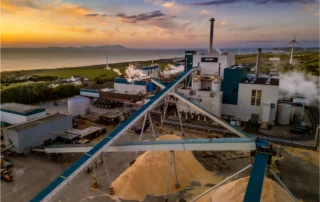
Holmen Workington increases sustainable power generation with HISS
Holmen Paper Mill in Workington, UK, identified an opportunity [...]

Interview with Hans Ladum-Poulsen, Heat Management’s newest representative
With many years of experience in the boiler and [...]
The Future of Boiler Efficiency: Integrating Infrasound Cleaning with IoT Technologies
May 8, 2026 /
Your industrial boiler is the heart of your operation. It’s a powerhouse of production, but it’s also a source of constant, nagging inefficiency. You’re likely trapped in a cycle of scheduled maintenance, cleaning your boiler based on a calendar, not on its actual condition.
This outdated approach is a gamble. You’re either cleaning too early, wasting precious energy and steam, or cleaning too late, after crippling fouling has already slashed your thermal efficiency and driven up fuel costs. The next leap in boiler optimization isn’t just a better tool; it’s a smarter, self-regulating system that ends the guesswork for good.
This is the dawn of the intelligent boiler, born from the convergence of advanced operational technology like Infrasound Cleaning and the data-driven power of the Industrial Internet of Things (IIoT). This article explores how this integration creates a predictive, condition-based maintenance ecosystem. We will transform your boiler cleaning from a routine expense into a strategic driver of efficiency and profit.
The Challenge: The Inefficiencies of Traditional Boiler Fouling Management
Fouling is a dynamic, relentless enemy, yet our traditional solutions are static and unresponsive. We rely on rigid schedules that ignore the real-time reality inside the boiler. This creates a cascade of operational and financial penalties.
The core of the problem is the “too early or too late” dilemma. A steam sootblower activated every eight hours might be firing into a relatively clean boiler, wasting energy and causing unnecessary wear. Conversely, waiting for that scheduled clean while deposits build rapidly means you are burning more fuel for every hour of operation, a problem that can lead to significant financial losses. According to ABB, shifting to predictive strategies can reduce plant downtime by as much as 20%, highlighting the steep cost of reactive maintenance.
Operators are essentially flying blind. Without real-time data on deposit buildup, decisions are based on lagging indicators like flue gas temperatures or, worse, historical assumptions that don’t account for changes in fuel quality or boiler load. This data black box makes true optimization impossible, leaving engineers to troubleshoot common boiler efficiency issues reactively instead of preventing them proactively.
This reactive cycle directly impacts your bottom line. It leads to higher fuel consumption, increased CO₂ emissions, and damaging thermal stress on boiler components. Ultimately, it elevates the risk of an unplanned shutdown—the most expensive event in any industrial plant.
The Foundational Technologies: A Two-Part Solution
To build a truly intelligent system, we must first understand its two core components. One provides the proactive cleaning power, while the other delivers the digital intelligence to command it. Together, they form a solution far greater than the sum of its parts.
The Proactive Cleaning Engine: Infrasound Technology
Infrasound cleaning is a non-intrusive, preventative technology. It uses low-frequency sound waves, typically around 20 Hz, to create subtle but pervasive vibrations throughout the boiler. Think of it not as a hammer, but as a constant hum that keeps surfaces from getting dirty in the first place.
These vibrations prevent soot, ash, and other particulates from adhering to heat transfer surfaces. Instead of blasting away hardened deposits, infrasound ensures those hard, sintered layers never form. A study by Vattenfall demonstrated that implementing infrasound systems can reduce the need for conventional sootblowing by up to 50%, proving its effectiveness as a preventative measure.
The primary benefit is maintaining a consistently high level of cleanliness. This avoids the efficiency peaks and valleys typical of scheduled cleaning cycles and protects boiler tubes from the erosion and thermal shock caused by aggressive methods. It’s a gentler, more effective way to prevent boiler fouling before it starts.
The Digital Nervous System: The Industrial Internet of Things (IIoT)
The Industrial Internet of Things is the brain of the modern plant. It’s a network of interconnected sensors, software, and powerful analytics platforms that gather and interpret real-time data from your most critical equipment. It transforms raw machine data into actionable intelligence.
In a boiler, IIoT sensors act as a digital nervous system, constantly monitoring vital parameters. These include temperature differentials across heat exchangers, flue gas composition, steam flow, and pressure drops. As noted by GE Vernova, a comprehensive IIoT suite can involve thousands of sensors to create a complete picture of boiler health.
Its key benefit is providing a precise, live “health report” of your boiler’s performance. This system detects the most subtle changes that signal the onset of fouling, long before they would appear on a traditional control panel. This integration of sensor networks for enhanced monitoring gives operators the visibility they have always lacked.
The Synergy: Creating a Self-Optimizing Cleaning Ecosystem
When you combine the preventative power of infrasound with the intelligence of IoT, the entire maintenance paradigm shifts. The boiler is no longer a passive asset to be managed; it becomes a self-aware, self-optimizing system. This is the practical application of emerging trends in boiler optimization.
From Scheduled to Condition-Based Activation
The most immediate transformation is the move from scheduled to condition-based cleaning. IoT sensors continuously monitor heat transfer efficiency. When they detect a predefined drop or a critical change in pressure differential, that data automatically triggers the Infrasound Cleaning system.
The system activates when it’s needed, where it’s needed, and for precisely as long as it’s needed. There is no wasted energy, no unnecessary wear. This dynamic response ensures the boiler is always operating at peak cleanliness and efficiency, a core principle of integrating real-time monitoring with advanced cleaning systems.
The Predictive Loop: Learning and Anticipating Fouling
The true power of this synergy is its ability to learn. By analyzing historical data, the integrated system can correlate fouling events with specific operational conditions—such as fuel type, boiler load, or combustion parameters. This is where the system evolves from reactive to truly predictive.
This analytical capability, central to systems like `Acospector™`, allows the platform to anticipate high-fouling conditions before they even occur. It can preemptively activate the infrasound system to prevent deposit buildup before it has any measurable impact on efficiency. This is the essence of harnessing machine learning for predictive boiler fouling prevention, turning historical data into a tool for future optimization.
Centralized Monitoring and Data-Driven Insights
This integration brings all critical information into a single, unified view. Engineers and plant managers gain access to a dashboard displaying real-time boiler performance, live sensor data, and cleaning system activity. This clarity empowers them to make smarter, data-driven decisions.
They can now see the direct impact of different fuel blends on fouling rates or adjust combustion parameters to minimize particulate formation at its source. This wealth of data transforms boiler management from a mechanical task into a strategic process, directly contributing to maximizing plant sustainability through data intelligence.
The Measurable Impact: Tangible Benefits for Plant Operations
This technological leap isn’t about abstract concepts; it’s about delivering concrete, bottom-line results. The integration of infrasound and IoT translates directly into improved efficiency, reliability, and profitability.
Maximized Thermal Efficiency & Fuel Savings
By maintaining a state of constant cleanliness, the boiler operates consistently closer to its design specifications. This directly reduces fuel consumption. Implementations by Schneider Electric have yielded energy savings of up to 8%, a significant reduction in one of the largest operational costs for any plant.
Reduced Emissions & Stronger ESG Profile
Higher efficiency means less fuel is burned to produce the same output. This leads to a quantifiable reduction in CO₂ and other harmful emissions, strengthening your company’s ESG (Environmental, Social, and Governance) profile. This synergy directly supports corporate goals for improving industrial boiler sustainability and helps in achieving strict EU emissions compliance.
Increased Uptime and Reliability
Predictive, preventative cleaning eliminates the severe fouling that often leads to forced outages for dangerous and costly manual cleaning. By addressing deposits before they become a critical problem, the system ensures greater boiler availability. Case studies from Rockwell Automation highlight uptime increases of 10% in demanding biomass applications, a testament to the power of innovative predictive maintenance strategies.
Extended Asset Lifespan
Finally, the gentle, non-erosive nature of infrasound cleaning reduces the thermal and mechanical stress placed on boiler tubes. Unlike the aggressive impact of steam sootblowers or other conventional methods, infrasound protects your investment. This extends the operational lifespan of your most critical assets and reduces long-term capital expenditures.
Conclusion: Heat Management’s Vision for the Autonomous Boiler
The integration of Infrasound Cleaning with IoT technologies is not a far-off concept from a research lab. It is the practical, necessary next step for any competitive industrial operation seeking to maximize efficiency and secure its future. It represents the critical shift from manual intervention to intelligent, data-driven automation.
This synergy lays the groundwork for even greater advancements, including AI-driven optimization and fully autonomous boiler control systems. The intelligent boiler is no longer a question of “if,” but “when.”
At Heat Management, we provide both the advanced cleaning hardware and the deep process expertise required to make this integration a reality. We are your partners in building a smarter, more efficient, and more profitable future for your plant.
Explore the technical specifications of our Infrasound Cleaning systems and see how they form the foundation for a smarter boiler.
Contact our engineers to discuss how a data-driven cleaning strategy can be tailored to your plant’s specific challenges.
Latest news & articles
Meeting EU Emissions Standards Through Advanced Steam Sootblowing Technologies
The walls are closing in. For plant managers and engineers [...]
Holmen Workington increases sustainable power generation with HISS
Holmen Paper Mill in Workington, UK, identified an opportunity [...]
Interview with Hans Ladum-Poulsen, Heat Management’s newest representative
With many years of experience in the boiler and [...]