

How Data-Driven Cleaning Solutions Are Transforming Industrial Boiler Operations
November 10, 2025 /

For decades, cleaning an industrial boiler has been a game of guesswork and routine. You run your sootblowers on a fixed schedule—every shift, every day—hoping you’re cleaning enough, but not too much. It’s a process based on habit, not heat transfer reality, a brute-force approach that plants have reluctantly accepted as a necessary evil.
But what if that entire paradigm was wrong? What if, instead of cleaning blindly, you could act with surgical precision? Imagine knowing the exact right time and place to clean for maximum impact, transforming a costly maintenance chore into a strategic advantage.
This isn’t a far-off fantasy. This is the new reality of industrial boiler management. This article explores how integrating real-time data analytics with advanced cleaning technologies is revolutionizing operations, turning a reactive burden into a proactive, value-driving process that saves fuel, money, and your peace of mind.
The Problem with “Blind” Cleaning: The Inefficiencies of a Time-Based Approach
The truth is, your boiler doesn’t get dirty on a schedule. Relying on a timer is like trying to navigate a minefield with a calendar. The consequences of this outdated method are quietly bleeding your operation dry, hitting you with costs you might not even see.
The Cost of Over-Cleaning
Think about the sheer power of high-pressure steam. Now, imagine blasting your boiler tubes with it when they’re already clean. Each unnecessary sootblowing cycle wastes a staggering amount of valuable steam—a resource you paid dearly to generate.
This isn’t just inefficient; it’s destructive. According to industry analysis, a significant portion of steam energy in conventional sootblowing is wasted, contributing nothing to cleaning. Over time, this relentless assault causes tube erosion, shortening the life of your most critical assets and driving up your operational costs (OPEX).
The Risk of Under-Cleaning
The flip side of the coin is even more dangerous. Waiting too long between cycles allows stubborn deposits of sinter and slag to form and harden. These deposits act as an insulator, crippling your boiler’s ability to transfer heat effectively.
Your control system compensates by burning more fuel to maintain steam output, sending your energy bills soaring. A mere 1% loss in boiler efficiency can increase annual fuel costs by hundreds of thousands of dollars for a typical industrial facility. Worse, this buildup can lead to a forced, unplanned shutdown for dangerous and expensive manual cleaning—a plant manager’s worst nightmare.
The Lack of Precision
Fouling is never uniform. A hard deposit might be forming in the superheater while the economizer remains perfectly clean. Yet, traditional systems blast the entire boiler with the same intensity.
This is the definition of inefficiency. You’re wasting energy cleaning areas that don’t need it while potentially failing to address the critical spots where fouling is actively hurting performance. It’s like using a fire hose to water a single potted plant—a colossal waste of resources for a minimal, untargeted effect.
The Solution: Creating an Intelligent Cleaning Ecosystem
The answer isn’t to clean more or less, but to clean smarter. By creating a closed-loop system where real-time data drives precise, automated action, you can escape the cycle of waste and risk. This is where an intelligent cleaning ecosystem changes the game entirely.
The Foundation: What Data Matters?
To make intelligent decisions, you need intelligent data. The system starts by creating a dynamic, real-time digital model of your boiler’s health. It continuously monitors the most critical data points: flue gas temperatures, pressure differentials, heat transfer coefficients, and steam flow.
This is the work of a powerful analytics engine. At Heat Management, our Acospector™ Process Analytics platform serves as the “brain” of the operation. It collects and interprets thousands of data points per second, giving you a clear, unambiguous picture of where and how fouling is impacting your boiler’s performance at any given moment.
From Data to Decision: The Intelligent Feedback Loop
Data alone is useless. The magic happens when that data is translated into an immediate, optimal decision. The analytics platform doesn’t just show you a problem; it predicts fouling trends before they severely impact your efficiency.
This creates an intelligent feedback loop. The system identifies a drop in heat transfer in a specific section -> it determines the most effective cleaning response -> it automatically activates the right cleaning technology with pinpoint accuracy. This is the core of true cleaning optimization, a strategy that enables a continuous, long-term improvement in overall boiler efficiency.
Integrating Advanced Cleaning Hardware
Once the brain makes a decision, it needs muscles to carry it out. This is where advanced cleaning hardware, guided by data, delivers unparalleled results. These are not your grandfather’s sootblowers; they are precision instruments of efficiency.
Our HISS® (High Impact Sootblowing System) acts as a surgical tool. When Acospector™ identifies a stubborn deposit, it tells the HISS® system exactly where to strike. HISS® delivers a targeted, high-energy pulse that shatters hard slag with maximum force and minimal steam, a process detailed in our step-by-step guide to HISS® technology implementation.
Meanwhile, our Infrasound Cleaning technology acts as a proactive shield. Triggered by data analytics, it generates low-frequency acoustic waves that vibrate throughout the boiler. This constant, gentle pressure prevents ash and particulate matter from ever settling and hardening, maintaining a baseline of cleanliness and making targeted sootblowing even more effective when needed.
The Impact: Measurable Gains from Data-Driven Operations
Shifting from a scheduled to a data-driven strategy isn’t just an operational tweak; it’s a fundamental transformation that delivers powerful, measurable returns across your entire operation. The results are not theoretical—they show up on your bottom line, in your compliance reports, and in the reliability of your plant.
Maximized Thermal Efficiency and Fuel Savings
The connection is simple and direct. A consistently cleaner boiler means superior heat transfer, which means you burn less fuel to generate the same amount of steam. Plants that have adopted these intelligent systems have seen documented thermal efficiency gains of 1-3%.
While that may sound small, the financial impact is enormous, translating directly into millions of dollars in annual fuel savings. This is especially critical for facilities like pulp and paper mills, which can use these advanced techniques for preventing boiler fouling to gain a significant competitive edge.
Significant Reduction in Operational Costs
The savings extend far beyond the fuel tank. By activating sootblowers only when and where they are needed, steam consumption for cleaning can be slashed by over 50%. This drastically reduces operational costs.
Furthermore, by preventing the formation of hard, sintered deposits, you eliminate the need for costly and hazardous manual cleaning. This means fewer shutdowns, lower labor costs, and a safer working environment for your team. The entire system is geared toward leveraging predictive maintenance to reduce downtime and keep your operation running at peak profitability.
Enhanced Sustainability and ESG Compliance
In today’s world, efficiency and environmental responsibility are two sides of the same coin. Every ton of fuel you don’t burn is a direct reduction in your carbon footprint. Lower fuel consumption means lower CO₂, NOx, and SOx emissions.
This helps your facility not only meet increasingly strict regulatory requirements but also achieve ambitious corporate Environmental, Social, and Governance (ESG) goals. For industries relying on renewables, this technology is a key part of achieving sustainability in biomass boiler operations, proving that what’s good for the planet is also good for business.
Increased Uptime and Equipment Longevity
Finally, a smarter cleaning strategy protects your multi-million dollar assets. By eliminating both the erosive effects of over-cleaning and the thermal stresses caused by heavy fouling, you reduce the wear and tear on critical boiler components.
This proactive approach prevents catastrophic tube failures and extends the operational lifespan of your boiler. The result is what every plant manager strives for: maximum uptime, predictable performance, and a reliable, resilient operation you can count on day in and day out.
The Future of Boiler Management is Predictive and Autonomous
We’ve journeyed from the old world of blind, scheduled cleaning to a new era of intelligent, data-driven optimization. The reactive, costly chore of boiler maintenance is being replaced by a smart, predictive ecosystem where sensors, powerful analytics, and precision hardware work in perfect harmony. This synergy is the key to unlocking peak performance.
The evolution doesn’t stop here. The next frontier in industrial maintenance technology will be driven by artificial intelligence and machine learning, creating fully autonomous systems that not only react but learn, adapt, and self-optimize over time.
For any industrial operation serious about efficiency, reliability, and sustainability, adopting a data-driven cleaning strategy is no longer just an option. It is a competitive necessity. The time to stop guessing and start knowing is now.
Latest news & articles

Meeting EU Emissions Standards Through Advanced Steam Sootblowing Technologies
The walls are closing in. For plant managers and engineers [...]
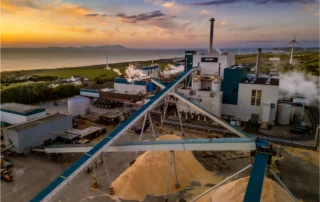
Holmen Workington increases sustainable power generation with HISS
Holmen Paper Mill in Workington, UK, identified an opportunity [...]

Interview with Hans Ladum-Poulsen, Heat Management’s newest representative
With many years of experience in the boiler and [...]
How Data-Driven Cleaning Solutions Are Transforming Industrial Boiler Operations
November 10, 2025 /
For decades, cleaning an industrial boiler has been a game of guesswork and routine. You run your sootblowers on a fixed schedule—every shift, every day—hoping you’re cleaning enough, but not too much. It’s a process based on habit, not heat transfer reality, a brute-force approach that plants have reluctantly accepted as a necessary evil.
But what if that entire paradigm was wrong? What if, instead of cleaning blindly, you could act with surgical precision? Imagine knowing the exact right time and place to clean for maximum impact, transforming a costly maintenance chore into a strategic advantage.
This isn’t a far-off fantasy. This is the new reality of industrial boiler management. This article explores how integrating real-time data analytics with advanced cleaning technologies is revolutionizing operations, turning a reactive burden into a proactive, value-driving process that saves fuel, money, and your peace of mind.
The Problem with “Blind” Cleaning: The Inefficiencies of a Time-Based Approach
The truth is, your boiler doesn’t get dirty on a schedule. Relying on a timer is like trying to navigate a minefield with a calendar. The consequences of this outdated method are quietly bleeding your operation dry, hitting you with costs you might not even see.
The Cost of Over-Cleaning
Think about the sheer power of high-pressure steam. Now, imagine blasting your boiler tubes with it when they’re already clean. Each unnecessary sootblowing cycle wastes a staggering amount of valuable steam—a resource you paid dearly to generate.
This isn’t just inefficient; it’s destructive. According to industry analysis, a significant portion of steam energy in conventional sootblowing is wasted, contributing nothing to cleaning. Over time, this relentless assault causes tube erosion, shortening the life of your most critical assets and driving up your operational costs (OPEX).
The Risk of Under-Cleaning
The flip side of the coin is even more dangerous. Waiting too long between cycles allows stubborn deposits of sinter and slag to form and harden. These deposits act as an insulator, crippling your boiler’s ability to transfer heat effectively.
Your control system compensates by burning more fuel to maintain steam output, sending your energy bills soaring. A mere 1% loss in boiler efficiency can increase annual fuel costs by hundreds of thousands of dollars for a typical industrial facility. Worse, this buildup can lead to a forced, unplanned shutdown for dangerous and expensive manual cleaning—a plant manager’s worst nightmare.
The Lack of Precision
Fouling is never uniform. A hard deposit might be forming in the superheater while the economizer remains perfectly clean. Yet, traditional systems blast the entire boiler with the same intensity.
This is the definition of inefficiency. You’re wasting energy cleaning areas that don’t need it while potentially failing to address the critical spots where fouling is actively hurting performance. It’s like using a fire hose to water a single potted plant—a colossal waste of resources for a minimal, untargeted effect.
The Solution: Creating an Intelligent Cleaning Ecosystem
The answer isn’t to clean more or less, but to clean smarter. By creating a closed-loop system where real-time data drives precise, automated action, you can escape the cycle of waste and risk. This is where an intelligent cleaning ecosystem changes the game entirely.
The Foundation: What Data Matters?
To make intelligent decisions, you need intelligent data. The system starts by creating a dynamic, real-time digital model of your boiler’s health. It continuously monitors the most critical data points: flue gas temperatures, pressure differentials, heat transfer coefficients, and steam flow.
This is the work of a powerful analytics engine. At Heat Management, our Acospector™ Process Analytics platform serves as the “brain” of the operation. It collects and interprets thousands of data points per second, giving you a clear, unambiguous picture of where and how fouling is impacting your boiler’s performance at any given moment.
From Data to Decision: The Intelligent Feedback Loop
Data alone is useless. The magic happens when that data is translated into an immediate, optimal decision. The analytics platform doesn’t just show you a problem; it predicts fouling trends before they severely impact your efficiency.
This creates an intelligent feedback loop. The system identifies a drop in heat transfer in a specific section -> it determines the most effective cleaning response -> it automatically activates the right cleaning technology with pinpoint accuracy. This is the core of true cleaning optimization, a strategy that enables a continuous, long-term improvement in overall boiler efficiency.
Integrating Advanced Cleaning Hardware
Once the brain makes a decision, it needs muscles to carry it out. This is where advanced cleaning hardware, guided by data, delivers unparalleled results. These are not your grandfather’s sootblowers; they are precision instruments of efficiency.
Our HISS® (High Impact Sootblowing System) acts as a surgical tool. When Acospector™ identifies a stubborn deposit, it tells the HISS® system exactly where to strike. HISS® delivers a targeted, high-energy pulse that shatters hard slag with maximum force and minimal steam, a process detailed in our step-by-step guide to HISS® technology implementation.
Meanwhile, our Infrasound Cleaning technology acts as a proactive shield. Triggered by data analytics, it generates low-frequency acoustic waves that vibrate throughout the boiler. This constant, gentle pressure prevents ash and particulate matter from ever settling and hardening, maintaining a baseline of cleanliness and making targeted sootblowing even more effective when needed.
The Impact: Measurable Gains from Data-Driven Operations
Shifting from a scheduled to a data-driven strategy isn’t just an operational tweak; it’s a fundamental transformation that delivers powerful, measurable returns across your entire operation. The results are not theoretical—they show up on your bottom line, in your compliance reports, and in the reliability of your plant.
Maximized Thermal Efficiency and Fuel Savings
The connection is simple and direct. A consistently cleaner boiler means superior heat transfer, which means you burn less fuel to generate the same amount of steam. Plants that have adopted these intelligent systems have seen documented thermal efficiency gains of 1-3%.
While that may sound small, the financial impact is enormous, translating directly into millions of dollars in annual fuel savings. This is especially critical for facilities like pulp and paper mills, which can use these advanced techniques for preventing boiler fouling to gain a significant competitive edge.
Significant Reduction in Operational Costs
The savings extend far beyond the fuel tank. By activating sootblowers only when and where they are needed, steam consumption for cleaning can be slashed by over 50%. This drastically reduces operational costs.
Furthermore, by preventing the formation of hard, sintered deposits, you eliminate the need for costly and hazardous manual cleaning. This means fewer shutdowns, lower labor costs, and a safer working environment for your team. The entire system is geared toward leveraging predictive maintenance to reduce downtime and keep your operation running at peak profitability.
Enhanced Sustainability and ESG Compliance
In today’s world, efficiency and environmental responsibility are two sides of the same coin. Every ton of fuel you don’t burn is a direct reduction in your carbon footprint. Lower fuel consumption means lower CO₂, NOx, and SOx emissions.
This helps your facility not only meet increasingly strict regulatory requirements but also achieve ambitious corporate Environmental, Social, and Governance (ESG) goals. For industries relying on renewables, this technology is a key part of achieving sustainability in biomass boiler operations, proving that what’s good for the planet is also good for business.
Increased Uptime and Equipment Longevity
Finally, a smarter cleaning strategy protects your multi-million dollar assets. By eliminating both the erosive effects of over-cleaning and the thermal stresses caused by heavy fouling, you reduce the wear and tear on critical boiler components.
This proactive approach prevents catastrophic tube failures and extends the operational lifespan of your boiler. The result is what every plant manager strives for: maximum uptime, predictable performance, and a reliable, resilient operation you can count on day in and day out.
The Future of Boiler Management is Predictive and Autonomous
We’ve journeyed from the old world of blind, scheduled cleaning to a new era of intelligent, data-driven optimization. The reactive, costly chore of boiler maintenance is being replaced by a smart, predictive ecosystem where sensors, powerful analytics, and precision hardware work in perfect harmony. This synergy is the key to unlocking peak performance.
The evolution doesn’t stop here. The next frontier in industrial maintenance technology will be driven by artificial intelligence and machine learning, creating fully autonomous systems that not only react but learn, adapt, and self-optimize over time.
For any industrial operation serious about efficiency, reliability, and sustainability, adopting a data-driven cleaning strategy is no longer just an option. It is a competitive necessity. The time to stop guessing and start knowing is now.
Latest news & articles
Meeting EU Emissions Standards Through Advanced Steam Sootblowing Technologies
The walls are closing in. For plant managers and engineers [...]
Holmen Workington increases sustainable power generation with HISS
Holmen Paper Mill in Workington, UK, identified an opportunity [...]
Interview with Hans Ladum-Poulsen, Heat Management’s newest representative
With many years of experience in the boiler and [...]