

Maximizing Plant Sustainability: Integrating Data Intelligence into Boiler Efficiency
January 19, 2026 /

The Paradigm Shift: From Reactive to Predictive Boiler Management
The Old Way (Reactive)
Think about the traditional approach. For decades, boiler management has been a game of reaction. An alarm screams, and you respond. A date on the calendar arrives, and you clean—whether it’s needed or not. You’re flying blind, making critical decisions based on guesswork and historical averages.
This reactive cycle is incredibly wasteful. Undetected fouling acts as an insulator on your heat transfer surfaces; even a 1mm layer of soot can increase fuel consumption by over 2.5%. Meanwhile, non-optimized sootblowing cycles consume massive amounts of steam, driving up auxiliary energy costs and putting unnecessary wear on your equipment. The greatest risk is the one you can’t see coming: the unplanned shutdown that brings production to a grinding halt.
This isn’t just inefficient; it’s unsustainable. Every drop of wasted fuel and every puff of excess steam contributes to your emissions profile. In an era of strict ESG accountability, you can no longer afford to manage your most critical assets by looking in the rearview mirror.
The New Way (Data-Driven & Predictive)
Now, imagine a different reality. Imagine having a “digital twin” of your boiler, a living, breathing data model that shows you exactly what’s happening inside, in real time. This is the power of a data-driven, predictive strategy. It’s a fundamental shift from reacting to problems to anticipating them before they occur.
With continuous monitoring and industrial data analytics, you gain the foresight to act proactively. You can see fouling begin to form and address it with surgical precision. You can correlate changes in fuel quality to performance dips and adjust your processes on the fly. This is the core of innovative predictive maintenance strategies for boilers, turning maintenance from a scheduled cost center into a dynamic, value-driving activity.
This new paradigm empowers you to make informed decisions based on live, empirical evidence, not assumptions. It’s about optimizing every aspect of the boiler’s operation, squeezing every last bit of performance from your assets while minimizing your environmental footprint. The result is a plant that is not only more profitable but also more resilient and responsible.
The Core Components of an Intelligent Boiler Ecosystem
Pillar 1: Advanced Data Acquisition & Sensing
It all begins with the data. High-quality, real-time data is the bedrock of any intelligent system. To move beyond basic control, you need to capture critical process variables that traditional sensors miss, which is why it’s crucial to understand how to begin integrating sensor networks for enhanced boiler monitoring.
This means deploying specialized sensors that provide a deeper level of insight. Think of systems that offer real-time fluid analysis to monitor combustion quality or detectors that provide an early warning of black liquor carryover. This is data that was previously invisible, yet it holds the key to preventing the catastrophic fouling that cripples recovery boilers and leads to costly shutdowns.
By capturing this rich, granular data, you create a comprehensive picture of your boiler’s health and performance. You are no longer just measuring temperature and pressure; you are monitoring the very chemistry of your process. This foundational layer of information is what makes true optimization possible.
Pillar 2: Real-Time Analytics & Interpretation
Raw data, on its own, is just noise. The magic happens when you process that data through powerful analytics engines that turn it into a clear signal. This is where trends, anomalies, and hidden efficiency gaps are brought to light.
An intelligent analytics platform can correlate dozens of different data points in real time. For example, it can pinpoint the exact relationship between a new batch of biomass fuel and a sudden increase in the fouling rate on a specific heat transfer surface. This allows you to move beyond treating symptoms and start addressing the root causes of inefficiency, a core principle of mastering boiler process analytics.
This level of interpretation gives your operators the insights they need to make smarter, faster decisions. It transforms them from system monitors into proactive process optimizers. The analytics engine does the heavy lifting, so your team can focus on taking decisive action that improves performance and sustainability.
Pillar 3: Intelligent Automation & Control
This is where data becomes action. The insights generated by your analytics engine are used to drive intelligent automation and control systems, creating a closed loop of continuous improvement. Instead of relying on manual intervention or fixed schedules, the system adapts dynamically to changing conditions.
A prime example of this is the evolution from traditional sootblowing to intelligent cleaning. The Heat Management HISS® (High Impact Sootblowing System) is not just a cleaning device; it’s an intelligent system that uses real-time data to determine precisely when, where, and how intensely to clean. This is a stark contrast to the brute-force approach of conventional methods, as detailed in this comparative guide on sootblowing technologies.
This data-driven approach ensures that steam is only used when and where it is most effective, maximizing heat transfer while minimizing waste. By automating the optimization process, you ensure that your boiler is always operating at peak efficiency, without requiring constant operator oversight. It’s the ultimate fusion of intelligence and action.
The Measurable Impact on Sustainability & Performance
Enhanced Energy Efficiency
The impact on your bottom line is immediate and significant. When heat transfer surfaces are kept consistently clean through intelligent, targeted cleaning, your boiler doesn’t have to work as hard. This means less fuel is required to produce the same amount of steam, directly lowering your largest operational cost.
Furthermore, by optimizing sootblowing cycles, intelligent systems like HISS® can slash auxiliary steam consumption by an astounding 30-45%. This isn’t just a marginal improvement; it’s a game-changing reduction in energy waste. These optimization techniques for reducing steam consumption translate directly into dramatic cost savings and a more efficient, profitable operation.
Reduced Emissions & Stronger ESG Profiles
The link between efficiency and sustainability is crystal clear: when you burn less fuel, you produce fewer emissions. Every ton of fuel saved is a direct reduction in CO₂, NOx, and other harmful pollutants released into the atmosphere. This is the most direct and powerful way to improve your plant’s environmental performance.
This makes ESG boiler optimization more than just a buzzword; it becomes a measurable reality. By integrating data intelligence, you create a verifiable record of emissions reduction, helping your company meet its public sustainability commitments and comply with increasingly stringent regulations. You are not just improving your process; you are building a stronger, more defensible ESG profile that resonates with investors, customers, and the community.
Improved Operational Reliability
For any Plant Manager, unplanned downtime is the ultimate nightmare. It halts production, incurs massive costs, and puts immense stress on your team. Predictive insights are your best defense against these catastrophic failures.
Systems that provide an early warning of carryover or detect combustion deviations allow you to address problems before they escalate into full-blown emergencies. This proactive stance on fouling management is a key component of extending boiler lifespan with preventive strategies. According to industry reports, predictive maintenance can reduce downtime by up to 50% and lower maintenance costs by 30%.
By leveraging data to anticipate issues, you transform your plant’s reliability. You can schedule maintenance on your own terms, maximize uptime, and ensure the consistent, predictable output that your business depends on. This is the foundation of a truly high-reliability operation.
Optimized Resource Management
The benefits of data intelligence extend far beyond fuel and steam. A well-managed boiler uses less water for blowdowns and requires fewer chemical treatments. Equipment that runs smoothly and within optimal parameters experiences less wear and tear, extending its operational life and reducing capital replacement costs.
This holistic approach to sustainable energy practices creates a ripple effect of savings and efficiency across your entire operation. You consume fewer resources, generate less waste, and get more out of your existing assets. It’s a powerful strategy for building a leaner, greener, and more resilient industrial plant.
The Future is Intelligent and Sustainable
Integrating data intelligence into your boiler operations is no longer a futuristic concept; it is a practical and essential strategy for survival and success in the modern industrial landscape. The path to achieving both peak efficiency and true sustainability runs directly through data-driven decision-making. By transforming your boiler from a liability into an intelligent asset, you unlock its full potential.
As technology continues to advance, the possibilities will only grow, with AI-driven optimization and seamless plant-wide integration on the horizon. The journey starts now, by embracing the power of data to create a safer, cleaner, and more profitable future. The choice is no longer between performance and sustainability—with data intelligence, you can finally achieve both.
Ready to turn boiler data into your most powerful asset?
- See how our intelligent sootblowing systems use data to deliver measurable improvements in efficiency and sustainability. Explore our HISS® technology.
- Ready to turn boiler data into actionable insights? Learn more about our process analytics solutions.
Latest news & articles

Meeting EU Emissions Standards Through Advanced Steam Sootblowing Technologies
The walls are closing in. For plant managers and engineers [...]
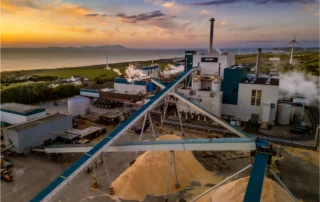
Holmen Workington increases sustainable power generation with HISS
Holmen Paper Mill in Workington, UK, identified an opportunity [...]

Interview with Hans Ladum-Poulsen, Heat Management’s newest representative
With many years of experience in the boiler and [...]
Maximizing Plant Sustainability: Integrating Data Intelligence into Boiler Efficiency
January 19, 2026 /
The Paradigm Shift: From Reactive to Predictive Boiler Management
The Old Way (Reactive)
Think about the traditional approach. For decades, boiler management has been a game of reaction. An alarm screams, and you respond. A date on the calendar arrives, and you clean—whether it’s needed or not. You’re flying blind, making critical decisions based on guesswork and historical averages.
This reactive cycle is incredibly wasteful. Undetected fouling acts as an insulator on your heat transfer surfaces; even a 1mm layer of soot can increase fuel consumption by over 2.5%. Meanwhile, non-optimized sootblowing cycles consume massive amounts of steam, driving up auxiliary energy costs and putting unnecessary wear on your equipment. The greatest risk is the one you can’t see coming: the unplanned shutdown that brings production to a grinding halt.
This isn’t just inefficient; it’s unsustainable. Every drop of wasted fuel and every puff of excess steam contributes to your emissions profile. In an era of strict ESG accountability, you can no longer afford to manage your most critical assets by looking in the rearview mirror.
The New Way (Data-Driven & Predictive)
Now, imagine a different reality. Imagine having a “digital twin” of your boiler, a living, breathing data model that shows you exactly what’s happening inside, in real time. This is the power of a data-driven, predictive strategy. It’s a fundamental shift from reacting to problems to anticipating them before they occur.
With continuous monitoring and industrial data analytics, you gain the foresight to act proactively. You can see fouling begin to form and address it with surgical precision. You can correlate changes in fuel quality to performance dips and adjust your processes on the fly. This is the core of innovative predictive maintenance strategies for boilers, turning maintenance from a scheduled cost center into a dynamic, value-driving activity.
This new paradigm empowers you to make informed decisions based on live, empirical evidence, not assumptions. It’s about optimizing every aspect of the boiler’s operation, squeezing every last bit of performance from your assets while minimizing your environmental footprint. The result is a plant that is not only more profitable but also more resilient and responsible.
The Core Components of an Intelligent Boiler Ecosystem
Pillar 1: Advanced Data Acquisition & Sensing
It all begins with the data. High-quality, real-time data is the bedrock of any intelligent system. To move beyond basic control, you need to capture critical process variables that traditional sensors miss, which is why it’s crucial to understand how to begin integrating sensor networks for enhanced boiler monitoring.
This means deploying specialized sensors that provide a deeper level of insight. Think of systems that offer real-time fluid analysis to monitor combustion quality or detectors that provide an early warning of black liquor carryover. This is data that was previously invisible, yet it holds the key to preventing the catastrophic fouling that cripples recovery boilers and leads to costly shutdowns.
By capturing this rich, granular data, you create a comprehensive picture of your boiler’s health and performance. You are no longer just measuring temperature and pressure; you are monitoring the very chemistry of your process. This foundational layer of information is what makes true optimization possible.
Pillar 2: Real-Time Analytics & Interpretation
Raw data, on its own, is just noise. The magic happens when you process that data through powerful analytics engines that turn it into a clear signal. This is where trends, anomalies, and hidden efficiency gaps are brought to light.
An intelligent analytics platform can correlate dozens of different data points in real time. For example, it can pinpoint the exact relationship between a new batch of biomass fuel and a sudden increase in the fouling rate on a specific heat transfer surface. This allows you to move beyond treating symptoms and start addressing the root causes of inefficiency, a core principle of mastering boiler process analytics.
This level of interpretation gives your operators the insights they need to make smarter, faster decisions. It transforms them from system monitors into proactive process optimizers. The analytics engine does the heavy lifting, so your team can focus on taking decisive action that improves performance and sustainability.
Pillar 3: Intelligent Automation & Control
This is where data becomes action. The insights generated by your analytics engine are used to drive intelligent automation and control systems, creating a closed loop of continuous improvement. Instead of relying on manual intervention or fixed schedules, the system adapts dynamically to changing conditions.
A prime example of this is the evolution from traditional sootblowing to intelligent cleaning. The Heat Management HISS® (High Impact Sootblowing System) is not just a cleaning device; it’s an intelligent system that uses real-time data to determine precisely when, where, and how intensely to clean. This is a stark contrast to the brute-force approach of conventional methods, as detailed in this comparative guide on sootblowing technologies.
This data-driven approach ensures that steam is only used when and where it is most effective, maximizing heat transfer while minimizing waste. By automating the optimization process, you ensure that your boiler is always operating at peak efficiency, without requiring constant operator oversight. It’s the ultimate fusion of intelligence and action.
The Measurable Impact on Sustainability & Performance
Enhanced Energy Efficiency
The impact on your bottom line is immediate and significant. When heat transfer surfaces are kept consistently clean through intelligent, targeted cleaning, your boiler doesn’t have to work as hard. This means less fuel is required to produce the same amount of steam, directly lowering your largest operational cost.
Furthermore, by optimizing sootblowing cycles, intelligent systems like HISS® can slash auxiliary steam consumption by an astounding 30-45%. This isn’t just a marginal improvement; it’s a game-changing reduction in energy waste. These optimization techniques for reducing steam consumption translate directly into dramatic cost savings and a more efficient, profitable operation.
Reduced Emissions & Stronger ESG Profiles
The link between efficiency and sustainability is crystal clear: when you burn less fuel, you produce fewer emissions. Every ton of fuel saved is a direct reduction in CO₂, NOx, and other harmful pollutants released into the atmosphere. This is the most direct and powerful way to improve your plant’s environmental performance.
This makes ESG boiler optimization more than just a buzzword; it becomes a measurable reality. By integrating data intelligence, you create a verifiable record of emissions reduction, helping your company meet its public sustainability commitments and comply with increasingly stringent regulations. You are not just improving your process; you are building a stronger, more defensible ESG profile that resonates with investors, customers, and the community.
Improved Operational Reliability
For any Plant Manager, unplanned downtime is the ultimate nightmare. It halts production, incurs massive costs, and puts immense stress on your team. Predictive insights are your best defense against these catastrophic failures.
Systems that provide an early warning of carryover or detect combustion deviations allow you to address problems before they escalate into full-blown emergencies. This proactive stance on fouling management is a key component of extending boiler lifespan with preventive strategies. According to industry reports, predictive maintenance can reduce downtime by up to 50% and lower maintenance costs by 30%.
By leveraging data to anticipate issues, you transform your plant’s reliability. You can schedule maintenance on your own terms, maximize uptime, and ensure the consistent, predictable output that your business depends on. This is the foundation of a truly high-reliability operation.
Optimized Resource Management
The benefits of data intelligence extend far beyond fuel and steam. A well-managed boiler uses less water for blowdowns and requires fewer chemical treatments. Equipment that runs smoothly and within optimal parameters experiences less wear and tear, extending its operational life and reducing capital replacement costs.
This holistic approach to sustainable energy practices creates a ripple effect of savings and efficiency across your entire operation. You consume fewer resources, generate less waste, and get more out of your existing assets. It’s a powerful strategy for building a leaner, greener, and more resilient industrial plant.
The Future is Intelligent and Sustainable
Integrating data intelligence into your boiler operations is no longer a futuristic concept; it is a practical and essential strategy for survival and success in the modern industrial landscape. The path to achieving both peak efficiency and true sustainability runs directly through data-driven decision-making. By transforming your boiler from a liability into an intelligent asset, you unlock its full potential.
As technology continues to advance, the possibilities will only grow, with AI-driven optimization and seamless plant-wide integration on the horizon. The journey starts now, by embracing the power of data to create a safer, cleaner, and more profitable future. The choice is no longer between performance and sustainability—with data intelligence, you can finally achieve both.
Ready to turn boiler data into your most powerful asset?
- See how our intelligent sootblowing systems use data to deliver measurable improvements in efficiency and sustainability. Explore our HISS® technology.
- Ready to turn boiler data into actionable insights? Learn more about our process analytics solutions.
Latest news & articles
Meeting EU Emissions Standards Through Advanced Steam Sootblowing Technologies
The walls are closing in. For plant managers and engineers [...]
Holmen Workington increases sustainable power generation with HISS
Holmen Paper Mill in Workington, UK, identified an opportunity [...]
Interview with Hans Ladum-Poulsen, Heat Management’s newest representative
With many years of experience in the boiler and [...]