

Integrating Real-Time Analytics with Boiler Systems for Enhanced Sustainability
November 10, 2025 /

Are you still managing your most critical assets by looking in the rearview mirror? For decades, boiler management has been a reactive game—a cycle of scheduled maintenance, lagging indicators, and educated guesses. This old way is broken, bleeding energy and profits while you fly blind.
The industrial world is undergoing a seismic shift, a digital transformation that replaces guesswork with certainty. The key is harnessing the power of real-time data, moving from a state of reaction to one of prediction and precise optimization. This isn’t just about new gadgets; it’s about a fundamental change in operational philosophy.
This article explores how integrating real-time analytics with your boiler system is more than an upgrade—it’s a strategic imperative for sustainability. We will uncover how this technology empowers plants to slash energy consumption, crush emissions targets, and achieve a new level of process stability. It’s time to stop reacting and start commanding.
The Limitations of Traditional Boiler Monitoring
The old approach to boiler maintenance is riddled with costly assumptions. Consider the common practice of calendar-based sootblowing. You’re either cleaning too often, wasting precious steam and eroding boiler tubes, or you’re cleaning too late, allowing efficiency-killing foul to build up and choke your heat transfer.
This leads directly to the data lag problem. By the time a manual inspection or a noticeable drop in steam production signals trouble, the damage is done. According to industry analysis, this reactive approach is a primary cause of unplanned downtime, a problem that IoT-enabled remote diagnostics are designed to solve.
Furthermore, traditional systems treat critical metrics as isolated islands of information. You might see the flue gas temperature, but you can’t see its complex relationship with fuel quality, steam flow, and fouling rates. Without an integrated platform, you’re only seeing symptoms, never the root cause, making true optimization impossible.
The Core of the Solution: What “Real-Time Analytics” Means for a Boiler System
Let’s be clear: real-time analytics is not just another dashboard flashing numbers. It’s about transforming a constant stream of raw data into actionable, predictive intelligence. It’s the brain that gives your boiler system its senses, using advanced sensors and algorithms to continuously analyze the parameters that truly matter.
This intelligence is built on several key data points. We monitor heat transfer efficiency by tracking temperature differentials, detecting the slightest hint of fouling the moment it begins. We analyze fluid and gas composition to predict scaling and corrosion before they compromise your assets, a capability exemplified by systems like Acospector™ that provide these critical insights. We even use acoustic and pressure signatures to understand the real-world effectiveness of cleaning systems, a principle that underpins the precision of Infrasound Cleaning and HISS® technology. This level of insight is crucial, as studies show that AI-driven monitoring can increase operational efficiency by up to 15%.
This rich, continuous data feed fuels powerful predictive models. These models can forecast fouling buildup with uncanny accuracy, anticipate component wear, and recommend the perfect moment for a cleaning cycle or maintenance intervention. This is the power of moving from a fixed schedule to a dynamic, condition-based strategy, a core tenet of Industry 4.0 in modern boiler systems.
The Impact: Measurable Gains in Sustainability and Performance
When you shift to a data-driven strategy, the results are not abstract—they are immediate, measurable, and impactful. The benefits ripple across your entire operation, starting with your energy bill and CO₂ footprint.
Optimized Energy Consumption & Reduced CO₂ Footprint
Data-driven, on-demand sootblowing, like that enabled by HISS® technology, directly targets your steam consumption. Instead of cleaning on a blind schedule, you clean with surgical precision, only when and where it’s needed. This can lead to a 2-5% reduction in auxiliary energy consumption, directly lowering fuel costs and the associated CO₂ emissions. This is a tangible step toward achieving your sustainability goals, a process detailed in our guide to sustainable biomass boiler operations.
Lowering Harmful Emissions (NOx, SOx)
A cleaner boiler is a more efficient boiler, and an efficient boiler maintains optimal combustion. By preventing fouling and ensuring stable operations, real-time analytics helps minimize the formation of harmful emissions like NOx and SOx. This isn’t just good for the environment; it’s critical for maintaining regulatory compliance and avoiding costly penalties. As platforms like Prometha from Cleaver-Brooks demonstrate, integrated monitoring is key to both efficiency and compliance.
Extended Asset Lifespan and Reduced Waste
Predictive maintenance, informed by real-time data, is your best defense against catastrophic failure. It allows you to move beyond reactive repairs and prevent unnecessary wear from overly aggressive cleaning schedules. This extends the life of expensive boiler tubes and components, minimizing material waste and slashing replacement costs. You’re not just saving money; you’re preserving the operational life of your most critical infrastructure.
Enhanced Process Stability and Reliability
Finally, real-time monitoring is the bedrock of operational reliability. It prevents the process upsets that lead to shutdowns and lost production. For instance, a Carryover Early Warning System provides the crucial data needed to avert a shutdown, ensuring consistent output and resource efficiency. This is how you leverage smart technology for continuous improvement and transform your boiler from a liability into a predictable, high-performing asset.
Conclusion: The Future is an Intelligent, Self-Optimizing Boiler System
The message is clear: integrating real-time analytics transforms a boiler from a passive, brute-force piece of equipment into an intelligent, dynamic, and responsive system. It’s the difference between driving with a map and driving with a live GPS that reroutes you around traffic you can’t even see yet.
This data-driven approach is no longer a luxury; it is essential for meeting modern sustainability targets, satisfying stringent emissions regulations, and boosting operational profitability. It aligns your environmental goals with your financial ones, proving that what’s good for the planet is also good for your bottom line.
The journey doesn’t end here. The next frontier involves AI and machine learning creating fully autonomous, self-optimizing boiler environments. Heat Management is at the forefront of this evolution, developing the intelligent systems that will power the next generation of sustainable industry.
Call to Action
See how real-time process analytics work in practice. Explore how Heat Management’s Acospector™ system provides the critical data needed to drive smarter, more sustainable boiler operations.
Latest news & articles

Meeting EU Emissions Standards Through Advanced Steam Sootblowing Technologies
The walls are closing in. For plant managers and engineers [...]
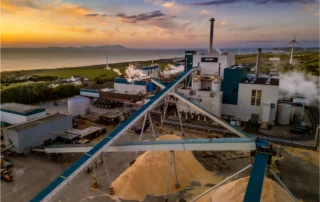
Holmen Workington increases sustainable power generation with HISS
Holmen Paper Mill in Workington, UK, identified an opportunity [...]

Interview with Hans Ladum-Poulsen, Heat Management’s newest representative
With many years of experience in the boiler and [...]
Integrating Real-Time Analytics with Boiler Systems for Enhanced Sustainability
November 10, 2025 /
Are you still managing your most critical assets by looking in the rearview mirror? For decades, boiler management has been a reactive game—a cycle of scheduled maintenance, lagging indicators, and educated guesses. This old way is broken, bleeding energy and profits while you fly blind.
The industrial world is undergoing a seismic shift, a digital transformation that replaces guesswork with certainty. The key is harnessing the power of real-time data, moving from a state of reaction to one of prediction and precise optimization. This isn’t just about new gadgets; it’s about a fundamental change in operational philosophy.
This article explores how integrating real-time analytics with your boiler system is more than an upgrade—it’s a strategic imperative for sustainability. We will uncover how this technology empowers plants to slash energy consumption, crush emissions targets, and achieve a new level of process stability. It’s time to stop reacting and start commanding.
The Limitations of Traditional Boiler Monitoring
The old approach to boiler maintenance is riddled with costly assumptions. Consider the common practice of calendar-based sootblowing. You’re either cleaning too often, wasting precious steam and eroding boiler tubes, or you’re cleaning too late, allowing efficiency-killing foul to build up and choke your heat transfer.
This leads directly to the data lag problem. By the time a manual inspection or a noticeable drop in steam production signals trouble, the damage is done. According to industry analysis, this reactive approach is a primary cause of unplanned downtime, a problem that IoT-enabled remote diagnostics are designed to solve.
Furthermore, traditional systems treat critical metrics as isolated islands of information. You might see the flue gas temperature, but you can’t see its complex relationship with fuel quality, steam flow, and fouling rates. Without an integrated platform, you’re only seeing symptoms, never the root cause, making true optimization impossible.
The Core of the Solution: What “Real-Time Analytics” Means for a Boiler System
Let’s be clear: real-time analytics is not just another dashboard flashing numbers. It’s about transforming a constant stream of raw data into actionable, predictive intelligence. It’s the brain that gives your boiler system its senses, using advanced sensors and algorithms to continuously analyze the parameters that truly matter.
This intelligence is built on several key data points. We monitor heat transfer efficiency by tracking temperature differentials, detecting the slightest hint of fouling the moment it begins. We analyze fluid and gas composition to predict scaling and corrosion before they compromise your assets, a capability exemplified by systems like Acospector™ that provide these critical insights. We even use acoustic and pressure signatures to understand the real-world effectiveness of cleaning systems, a principle that underpins the precision of Infrasound Cleaning and HISS® technology. This level of insight is crucial, as studies show that AI-driven monitoring can increase operational efficiency by up to 15%.
This rich, continuous data feed fuels powerful predictive models. These models can forecast fouling buildup with uncanny accuracy, anticipate component wear, and recommend the perfect moment for a cleaning cycle or maintenance intervention. This is the power of moving from a fixed schedule to a dynamic, condition-based strategy, a core tenet of Industry 4.0 in modern boiler systems.
The Impact: Measurable Gains in Sustainability and Performance
When you shift to a data-driven strategy, the results are not abstract—they are immediate, measurable, and impactful. The benefits ripple across your entire operation, starting with your energy bill and CO₂ footprint.
Optimized Energy Consumption & Reduced CO₂ Footprint
Data-driven, on-demand sootblowing, like that enabled by HISS® technology, directly targets your steam consumption. Instead of cleaning on a blind schedule, you clean with surgical precision, only when and where it’s needed. This can lead to a 2-5% reduction in auxiliary energy consumption, directly lowering fuel costs and the associated CO₂ emissions. This is a tangible step toward achieving your sustainability goals, a process detailed in our guide to sustainable biomass boiler operations.
Lowering Harmful Emissions (NOx, SOx)
A cleaner boiler is a more efficient boiler, and an efficient boiler maintains optimal combustion. By preventing fouling and ensuring stable operations, real-time analytics helps minimize the formation of harmful emissions like NOx and SOx. This isn’t just good for the environment; it’s critical for maintaining regulatory compliance and avoiding costly penalties. As platforms like Prometha from Cleaver-Brooks demonstrate, integrated monitoring is key to both efficiency and compliance.
Extended Asset Lifespan and Reduced Waste
Predictive maintenance, informed by real-time data, is your best defense against catastrophic failure. It allows you to move beyond reactive repairs and prevent unnecessary wear from overly aggressive cleaning schedules. This extends the life of expensive boiler tubes and components, minimizing material waste and slashing replacement costs. You’re not just saving money; you’re preserving the operational life of your most critical infrastructure.
Enhanced Process Stability and Reliability
Finally, real-time monitoring is the bedrock of operational reliability. It prevents the process upsets that lead to shutdowns and lost production. For instance, a Carryover Early Warning System provides the crucial data needed to avert a shutdown, ensuring consistent output and resource efficiency. This is how you leverage smart technology for continuous improvement and transform your boiler from a liability into a predictable, high-performing asset.
Conclusion: The Future is an Intelligent, Self-Optimizing Boiler System
The message is clear: integrating real-time analytics transforms a boiler from a passive, brute-force piece of equipment into an intelligent, dynamic, and responsive system. It’s the difference between driving with a map and driving with a live GPS that reroutes you around traffic you can’t even see yet.
This data-driven approach is no longer a luxury; it is essential for meeting modern sustainability targets, satisfying stringent emissions regulations, and boosting operational profitability. It aligns your environmental goals with your financial ones, proving that what’s good for the planet is also good for your bottom line.
The journey doesn’t end here. The next frontier involves AI and machine learning creating fully autonomous, self-optimizing boiler environments. Heat Management is at the forefront of this evolution, developing the intelligent systems that will power the next generation of sustainable industry.
Call to Action
See how real-time process analytics work in practice. Explore how Heat Management’s Acospector™ system provides the critical data needed to drive smarter, more sustainable boiler operations.
Latest news & articles
Meeting EU Emissions Standards Through Advanced Steam Sootblowing Technologies
The walls are closing in. For plant managers and engineers [...]
Holmen Workington increases sustainable power generation with HISS
Holmen Paper Mill in Workington, UK, identified an opportunity [...]
Interview with Hans Ladum-Poulsen, Heat Management’s newest representative
With many years of experience in the boiler and [...]