
How much power generation is lost in pulp mills due to inefficient cleaning of heat transfer surfaces?
Det är möjligt att optimera driften av återvinningspannor i massaproduktionsanläggningar betydligt genom att rengöra soten från värmeöverföringsytorna på ett effektivare sätt. Vi vet det, vi har gjort forskningen. Här är vad vi har upptäckt från vår studie av återvinningspannor i Sverige.
In Sweden, the average black liquor recovery boiler is rated at 1800 TDS/day. The typical steam consumption of the sootblowers is 5-10 % of the produced steam. In the average sized boiler, sootblower steam consumption is around 16 tons/hour, which can be used for 2-2.75 MW electricity, depending on steam data and type of turbine. With a yearly operation time of around 8,500 hours, this adds up to 545 GWh of electricity for 27 black liquor boilers. Roughly 45% of this can be saved by using a more efficient steam soot blowing system. Hög effektig sotblåsningssystem (HISS), is our patented method of optimizing steam sootblowers, i.e., saving 245 GWh of electricity. This corresponds to the yearly production of 40, 150m high wind turbine towers.
Now, let’s apply this globally. There are more than 450 recovery boilers around the world so, if we assume the same average boiler size and sootblower steam consumption as in Sweden, we end up with a potential total savings of around 4080 GWh of electricity per year. This corresponds to the yearly production of 660 wind turbine towers.
Today, one third of the black liquor boilers in Sweden are equipped with HISS, and we are sure that more and more will follow— not just in Sweden, but around the world. Increasing the electrical output, as mentioned above, is one alternative for boosting mill revenue using sustainable, de-carbonizing power generation. But some plants use HISS instead to step up the number of sootblower starts or combine increased starts with steam savings—and, thereby, increase boiler availability and mill production.
Den HISS system offers unique flexibility when it comes to operating recovery boilers in the most sustainable and economical way.
Senaste nyheterna & artiklarna

Uppfyller EU:s utsläppsnormer genom avancerade ångsläckningstekniker
Muren närmar sig. För fabriksledare och ingenjörer [...]
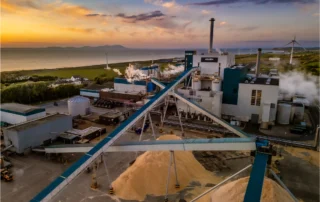
Holmen Workington ökar hållbar elproduktion med HISS
Holmenpappersbruk i Workington, Storbritannien, identifierade en möjlighet [...]

Intervju med Hans Ladum-Poulsen Heat Management, s nyaste representanten
Med många års erfarenhet inom pannutrustning och [...]
Förlorar ert massaproduktionsverk energi?
mars 16, 2021 /

How much power generation is lost in pulp mills due to inefficient cleaning of heat transfer surfaces?
Det är möjligt att optimera driften av återvinningspannor i massaproduktionsanläggningar betydligt genom att rengöra soten från värmeöverföringsytorna på ett effektivare sätt. Vi vet det, vi har gjort forskningen. Här är vad vi har upptäckt från vår studie av återvinningspannor i Sverige.
In Sweden, the average black liquor recovery boiler is rated at 1800 TDS/day. The typical steam consumption of the sootblowers is 5-10 % of the produced steam. In the average sized boiler, sootblower steam consumption is around 16 tons/hour, which can be used for 2-2.75 MW electricity, depending on steam data and type of turbine. With a yearly operation time of around 8,500 hours, this adds up to 545 GWh of electricity for 27 black liquor boilers. Roughly 45% of this can be saved by using a more efficient steam soot blowing system. Hög effektig sotblåsningssystem (HISS), is our patented method of optimizing steam sootblowers, i.e., saving 245 GWh of electricity. This corresponds to the yearly production of 40, 150m high wind turbine towers.
Now, let’s apply this globally. There are more than 450 recovery boilers around the world so, if we assume the same average boiler size and sootblower steam consumption as in Sweden, we end up with a potential total savings of around 4080 GWh of electricity per year. This corresponds to the yearly production of 660 wind turbine towers.
Today, one third of the black liquor boilers in Sweden are equipped with HISS, and we are sure that more and more will follow— not just in Sweden, but around the world. Increasing the electrical output, as mentioned above, is one alternative for boosting mill revenue using sustainable, de-carbonizing power generation. But some plants use HISS instead to step up the number of sootblower starts or combine increased starts with steam savings—and, thereby, increase boiler availability and mill production.
Den HISS system offers unique flexibility when it comes to operating recovery boilers in the most sustainable and economical way.
Senaste nyheterna & artiklarna
Uppfyller EU:s utsläppsnormer genom avancerade ångsläckningstekniker
Muren närmar sig. För fabriksledare och ingenjörer [...]
Holmen Workington ökar hållbar elproduktion med HISS
Holmenpappersbruk i Workington, Storbritannien, identifierade en möjlighet [...]
Intervju med Hans Ladum-Poulsen Heat Management, s nyaste representanten
Med många års erfarenhet inom pannutrustning och [...]