

Your boiler is talking. Constantly. Every minute, it generates thousands of data points—temperatures, pressures, flow rates—all streaming into your DCS and SCADA systems. But is anyone truly listening?
The truth is, this flood of information often creates more confusion than clarity. You’re drowning in data but starving for insight. This gap between collecting numbers and taking decisive action leads to reactive maintenance, catastrophic unplanned downtime, and creeping inefficiencies that silently sabotage your profitability and sustainability goals.
This isn’t just another article about “big data.” This is your practical framework for translating complex boiler analytics into a proactive, data-driven maintenance program. We will move from abstract theory to concrete application, showing you exactly how to convert numbers on a screen into scheduled actions that restore reliability and drive peak performance.
The Foundation: Shifting from a Reactive to a Predictive Mindset
For decades, the plant floor has been dominated by two outdated maintenance philosophies. They feel safe, but they are costing you a fortune in lost potential and emergency repairs. It’s time for a fundamental shift in thinking.
Beyond Time-Based Schedules: The Limits of Traditional Maintenance
First, there’s reactive maintenance—the “if it ain’t broke, don’t fix it” approach. This is not a strategy; it’s a gamble that almost always ends in expensive, production-halting failures. According to insights from McKinsey & Company on the business impact of predictive approaches, this model carries the highest risk and cost.
Then came preventive maintenance, based on rigid, time-based schedules. While an improvement, it often leads to replacing parts that are perfectly fine or performing unnecessary work, wasting both labor and resources. It’s a step in the right direction, but it’s still blind to the actual, real-time condition of your equipment.
The goal is predictive maintenance: a condition-based strategy driven by real-time data. This is about making the perfect intervention at the exact right moment. The key to unlocking this power lies in systematically identifying the right Key Performance Indicators (KPIs) and linking them to specific, pre-planned operational responses, a concept supported by Emerson’s resources on plant reliability.
Step 1: Identifying the Critical Boiler KPIs That Drive Action
You don’t need to track every single data point. You need to focus on the vital signs that tell the true story of your boiler’s health and performance. Ignoring these is like ignoring a rising fever.
What Data Actually Matters for Fouling, Efficiency, and Reliability?
For thermal performance and fouling, the most critical indicators are flue gas temperatures, especially at the superheater and economizer exits. A steady rise is a clear signal of deposit buildup. Similarly, tracking heat transfer coefficients (k-values) and the differential pressure (dP) across heat transfer sections provides direct evidence of fouling, as detailed in technical resources from boiler experts like Babcock & Wilcox.
Combustion and emissions data, such as O₂ and CO levels, are crucial for efficiency and environmental compliance. But what if you could see a problem before it even forms deposits? This is where real-time fluid analysis comes in. Systems like Acospector™ provide crucial data on ash composition and fouling propensity, giving you a predictive edge that traditional sensors can’t match.
Finally, don’t overlook the performance of your cleaning systems themselves. Are your sootblowers consuming more steam than usual? Is your infrasound system operating at peak effectiveness? This data, often ignored, is essential for a closed-loop, intelligent maintenance strategy, a topic frequently covered in process optimization resources from industry leaders like Valmet.
Step 2: The Framework for Turning Data into Decisions
Having the right data is only half the battle. The real transformation happens when you build a system to turn that data into automatic, intelligent action. It’s time to build your playbook.
From Trend Lines to Task Lists: A 3-Part Methodology
First, you must establish a performance baseline. You cannot identify a deviation if you don’t know what “good” looks like. This means defining your boiler’s optimal operating parameters under clean conditions, a foundational principle in ASHRAE’s disciplined approach to system monitoring. This baseline becomes the benchmark against which all future data is measured.
Second, set intelligent thresholds and alarms. Move beyond simple high/low alerts that just create noise. A modern approach, often discussed in Siemens’ industrial automation resources, involves multi-level thresholds. For example, a gradual 5°C rise in economizer exit gas temperature might trigger a “Warning” to schedule an inspection, while a sudden 15°C rise triggers a “Critical” alert for immediate cleaning action.
Finally, create an actionable maintenance playbook. This is where data becomes action. You must directly connect specific data triggers to pre-defined maintenance strategies. This playbook removes guesswork during high-pressure situations and ensures a consistent, effective response every time.
| Data Trigger (The “What”) | Likely Cause (The “Why”) | Actionable Strategy (The “How”) |
|---|---|---|
| Steadily increasing dP across superheater. | Slagging or fouling on tubes. | Adjust HISS® sootblowing sequence to target the specific area with higher impact. |
Acospector™ detects high alkali content in ash. |
Fuel change or process upset increasing fouling risk. | Proactively increase Infrasound Cleaning frequency to prevent deposit buildup. |
| Gradual rise in flue gas exit temperature. | Fouling in the economizer or air preheater. | Schedule a targeted cleaning cycle and investigate sootblower effectiveness in that zone. |
| Spike in sootblower steam consumption. | Leaking valve or inefficient nozzle. | Flag the specific sootblower for inspection during the next scheduled maintenance window. |
The Impact: Quantifying the Gains of a Data-Driven Strategy
What does this all mean for your bottom line and operational goals? The results are not just theoretical; they are tangible, measurable, and transformative. This is how you justify the investment in smarter technology.
From Insights to ROI: The Real-World Benefits
A data-driven strategy allows you to predict and prevent boiler trips caused by heavy fouling, directly increasing uptime and production output. This aligns with the core goals of asset performance management discussed by ABB, where reliability is paramount.
You will achieve enhanced thermal efficiency by maintaining optimal heat transfer. This leads to significant fuel savings and, critically, reduced CO₂ emissions. According to the U.S. Department of Energy’s steam system resources, even modest efficiency gains can yield substantial cost reductions annually.
Furthermore, you can optimize resource use by reducing sootblowing steam consumption, cleaning only when and where data tells you it’s needed. This data-driven approach also extends equipment lifespan by minimizing erosion and corrosion from overly aggressive cleaning cycles, a key concern in heavy industrial applications detailed by experts like ANDRITZ.
Conclusion: Your Data is Your Roadmap to a Smarter Boiler
Stop thinking of boiler analytics as a collection of passive numbers. They are a strategic asset, a living roadmap to a more reliable, efficient, and profitable operation. By implementing a structured approach of establishing baselines, setting intelligent thresholds, and building an actionable playbook, you transform maintenance from a reactive cost center into a proactive driver of value.
The future of industrial boiler operation is not just about more data; it’s about more intelligence. It is predictive, proactive, and powered by a deep understanding of what your equipment is telling you every second of the day. As the International Energy Agency highlights in its reports, this digital optimization is central to the next wave of industrial productivity and sustainability.
See how Heat Management’s process analytics and advanced cleaning systems provide the data and tools needed to build a truly actionable maintenance strategy. Explore Acospector™ and HISS® technology.
Latest news & articles

Meeting EU Emissions Standards Through Advanced Steam Sootblowing Technologies
The walls are closing in. For plant managers and engineers [...]
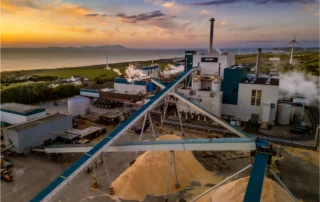
Holmen Workington increases sustainable power generation with HISS
Holmen Paper Mill in Workington, UK, identified an opportunity [...]

Interview with Hans Ladum-Poulsen, Heat Management’s newest representative
With many years of experience in the boiler and [...]
Turning Boiler Analytics into Actionable Maintenance Strategies
August 28, 2026 /

Your boiler is talking. Constantly. Every minute, it generates thousands of data points—temperatures, pressures, flow rates—all streaming into your DCS and SCADA systems. But is anyone truly listening?
The truth is, this flood of information often creates more confusion than clarity. You’re drowning in data but starving for insight. This gap between collecting numbers and taking decisive action leads to reactive maintenance, catastrophic unplanned downtime, and creeping inefficiencies that silently sabotage your profitability and sustainability goals.
This isn’t just another article about “big data.” This is your practical framework for translating complex boiler analytics into a proactive, data-driven maintenance program. We will move from abstract theory to concrete application, showing you exactly how to convert numbers on a screen into scheduled actions that restore reliability and drive peak performance.
The Foundation: Shifting from a Reactive to a Predictive Mindset
For decades, the plant floor has been dominated by two outdated maintenance philosophies. They feel safe, but they are costing you a fortune in lost potential and emergency repairs. It’s time for a fundamental shift in thinking.
Beyond Time-Based Schedules: The Limits of Traditional Maintenance
First, there’s reactive maintenance—the “if it ain’t broke, don’t fix it” approach. This is not a strategy; it’s a gamble that almost always ends in expensive, production-halting failures. According to insights from McKinsey & Company on the business impact of predictive approaches, this model carries the highest risk and cost.
Then came preventive maintenance, based on rigid, time-based schedules. While an improvement, it often leads to replacing parts that are perfectly fine or performing unnecessary work, wasting both labor and resources. It’s a step in the right direction, but it’s still blind to the actual, real-time condition of your equipment.
The goal is predictive maintenance: a condition-based strategy driven by real-time data. This is about making the perfect intervention at the exact right moment. The key to unlocking this power lies in systematically identifying the right Key Performance Indicators (KPIs) and linking them to specific, pre-planned operational responses, a concept supported by Emerson’s resources on plant reliability.
Step 1: Identifying the Critical Boiler KPIs That Drive Action
You don’t need to track every single data point. You need to focus on the vital signs that tell the true story of your boiler’s health and performance. Ignoring these is like ignoring a rising fever.
What Data Actually Matters for Fouling, Efficiency, and Reliability?
For thermal performance and fouling, the most critical indicators are flue gas temperatures, especially at the superheater and economizer exits. A steady rise is a clear signal of deposit buildup. Similarly, tracking heat transfer coefficients (k-values) and the differential pressure (dP) across heat transfer sections provides direct evidence of fouling, as detailed in technical resources from boiler experts like Babcock & Wilcox.
Combustion and emissions data, such as O₂ and CO levels, are crucial for efficiency and environmental compliance. But what if you could see a problem before it even forms deposits? This is where real-time fluid analysis comes in. Systems like Acospector™ provide crucial data on ash composition and fouling propensity, giving you a predictive edge that traditional sensors can’t match.
Finally, don’t overlook the performance of your cleaning systems themselves. Are your sootblowers consuming more steam than usual? Is your infrasound system operating at peak effectiveness? This data, often ignored, is essential for a closed-loop, intelligent maintenance strategy, a topic frequently covered in process optimization resources from industry leaders like Valmet.
Step 2: The Framework for Turning Data into Decisions
Having the right data is only half the battle. The real transformation happens when you build a system to turn that data into automatic, intelligent action. It’s time to build your playbook.
From Trend Lines to Task Lists: A 3-Part Methodology
First, you must establish a performance baseline. You cannot identify a deviation if you don’t know what “good” looks like. This means defining your boiler’s optimal operating parameters under clean conditions, a foundational principle in ASHRAE’s disciplined approach to system monitoring. This baseline becomes the benchmark against which all future data is measured.
Second, set intelligent thresholds and alarms. Move beyond simple high/low alerts that just create noise. A modern approach, often discussed in Siemens’ industrial automation resources, involves multi-level thresholds. For example, a gradual 5°C rise in economizer exit gas temperature might trigger a “Warning” to schedule an inspection, while a sudden 15°C rise triggers a “Critical” alert for immediate cleaning action.
Finally, create an actionable maintenance playbook. This is where data becomes action. You must directly connect specific data triggers to pre-defined maintenance strategies. This playbook removes guesswork during high-pressure situations and ensures a consistent, effective response every time.
| Data Trigger (The “What”) | Likely Cause (The “Why”) | Actionable Strategy (The “How”) |
|---|---|---|
| Steadily increasing dP across superheater. | Slagging or fouling on tubes. | Adjust HISS® sootblowing sequence to target the specific area with higher impact. |
Acospector™ detects high alkali content in ash. |
Fuel change or process upset increasing fouling risk. | Proactively increase Infrasound Cleaning frequency to prevent deposit buildup. |
| Gradual rise in flue gas exit temperature. | Fouling in the economizer or air preheater. | Schedule a targeted cleaning cycle and investigate sootblower effectiveness in that zone. |
| Spike in sootblower steam consumption. | Leaking valve or inefficient nozzle. | Flag the specific sootblower for inspection during the next scheduled maintenance window. |
The Impact: Quantifying the Gains of a Data-Driven Strategy
What does this all mean for your bottom line and operational goals? The results are not just theoretical; they are tangible, measurable, and transformative. This is how you justify the investment in smarter technology.
From Insights to ROI: The Real-World Benefits
A data-driven strategy allows you to predict and prevent boiler trips caused by heavy fouling, directly increasing uptime and production output. This aligns with the core goals of asset performance management discussed by ABB, where reliability is paramount.
You will achieve enhanced thermal efficiency by maintaining optimal heat transfer. This leads to significant fuel savings and, critically, reduced CO₂ emissions. According to the U.S. Department of Energy’s steam system resources, even modest efficiency gains can yield substantial cost reductions annually.
Furthermore, you can optimize resource use by reducing sootblowing steam consumption, cleaning only when and where data tells you it’s needed. This data-driven approach also extends equipment lifespan by minimizing erosion and corrosion from overly aggressive cleaning cycles, a key concern in heavy industrial applications detailed by experts like ANDRITZ.
Conclusion: Your Data is Your Roadmap to a Smarter Boiler
Stop thinking of boiler analytics as a collection of passive numbers. They are a strategic asset, a living roadmap to a more reliable, efficient, and profitable operation. By implementing a structured approach of establishing baselines, setting intelligent thresholds, and building an actionable playbook, you transform maintenance from a reactive cost center into a proactive driver of value.
The future of industrial boiler operation is not just about more data; it’s about more intelligence. It is predictive, proactive, and powered by a deep understanding of what your equipment is telling you every second of the day. As the International Energy Agency highlights in its reports, this digital optimization is central to the next wave of industrial productivity and sustainability.
See how Heat Management’s process analytics and advanced cleaning systems provide the data and tools needed to build a truly actionable maintenance strategy. Explore Acospector™ and HISS® technology.
Latest news & articles
Meeting EU Emissions Standards Through Advanced Steam Sootblowing Technologies
The walls are closing in. For plant managers and engineers [...]
Holmen Workington increases sustainable power generation with HISS
Holmen Paper Mill in Workington, UK, identified an opportunity [...]
Interview with Hans Ladum-Poulsen, Heat Management’s newest representative
With many years of experience in the boiler and [...]