
Pathways to ESG Success: Reducing Emissions with Data-Driven Boiler Optimization
June 2, 2026 /

The pressure is on. Investors, regulators, and the public are no longer just asking for sustainability reports; they are demanding verifiable proof of action. For plant managers and engineers, this isn’t a distant corporate goal—it’s a daily operational reality that directly impacts your budget, your performance, and your very license to operate.
The question is no longer if you should act on ESG, but how you can achieve measurable environmental gains without crippling your plant’s performance. The answer lies at the heart of your facility: the boiler. Often the single largest source of emissions, the boiler holds the key to unlocking a new level of efficiency, but traditional, reactive management is leaving that potential locked away.
This is your pathway to bridging that gap. We will show you how to transform your boiler from an emissions liability into a cornerstone of your ESG strategy. By leveraging data-driven optimization and intelligent cleaning technologies, you can directly lower fuel consumption, slash emissions, and secure a future of sustainable, high-impact performance.
The Inefficiency-Emissions Link: Why Boiler Performance is an ESG Priority
Here’s the brutal truth: every layer of soot and ash building up inside your boiler is actively working against your ESG goals. This fouling acts as an insulator, crippling heat transfer and forcing you to burn more fuel just to maintain the required steam output. According to the U.S. Department of Energy, this inefficiency can force 1-3% higher fuel use for every 1% drop in efficiency, directly increasing your CO₂, NOx, and SOx emissions.
But the damage doesn’t stop at CO₂. Inefficient combustion caused by poor cleaning also increases particulate matter (PM), a critical pollutant that impacts air quality and complicates regulatory compliance. The European Commission notes that in some industrial plants, fouling can increase fuel consumption by up to 8%, amplifying the entire spectrum of harmful emissions and putting you at odds with standards like the EU Emissions Trading System.
The core problem is a dangerous data gap. Managing your boiler based on calendar schedules and historical assumptions means you are flying blind. Inefficiencies grow unchecked between manual inspections, turning your most critical asset into an unpredictable ESG liability that threatens both your environmental targets and your bottom line.
The Data-Driven Approach: Shifting from Reactive to Predictive Optimization
What if you could see trouble coming before it hits? A data-driven approach gives you that foresight, transforming boiler management from a reactive guessing game into a predictive science. The foundation of this shift lies in continuously monitoring the vital signs of your boiler’s health.
Key performance indicators (KPIs) like flue gas temperatures, steam flow rates, pressure differentials, and heat transfer coefficients tell the true story of your boiler’s condition in real-time. According to a Deloitte report on industrial energy, leveraging this kind of data analytics in energy efficiency can boost boiler performance by 3-7%. This continuous stream of information closes the data gap, revealing fouling trends and operational deviations long before they become critical problems.
This is where advanced process analytics systems, like Heat Management’s Acospector™, become the “brain” of the operation. These systems don’t just collect data; they interpret it. By analyzing trends, they can identify specific areas of inefficiency, predict costly carryover events, and provide the actionable intelligence needed to maintain peak performance and achieve sustainable boiler performance.
Intelligent Technologies in Action: Turning Data into Emissions Reduction
Data is useless without action. Intelligent cleaning technologies are the “hands” of your optimization strategy, using the insights from process analytics to execute precise, effective cleaning that directly reduces emissions.
Optimized Sootblowing with HISS®
Are you still running your sootblowers on a timer? That outdated, calendar-based approach wastes enormous amounts of high-value steam and can even cause tube erosion. An intelligent, data-driven strategy, like our High Impact Sootblowing System (HISS®), uses real-time heat transfer data to activate cleaning sequences only where and when they are needed. This precision maintains optimal heat transfer, minimizing the excess fuel burn that drives up CO₂ emissions. As detailed in research from major boiler OEM Babcock & Wilcox, this optimized approach can reduce sootblowing steam consumption by up to 40%, lowering your plant’s overall energy intensity and carbon footprint.
Proactive Fouling Prevention with Infrasound Cleaning
The most effective way to fight fouling is to prevent it from starting. Infrasound cleaning technology generates low-frequency sound waves that create a continuous, gentle vibration on boiler surfaces. This prevents soot and ash particles from adhering and forming hard, insulating layers in the first place. By maintaining a consistently high level of cleanliness, the boiler operates at a higher baseline efficiency. This leads to sustained lower fuel consumption and stable, predictable emissions levels, a key component of achieving ESG compliance boiler optimization.
Mitigating Process Upsets with Carryover Early Warning
In recovery boilers, a black liquor carryover event can be catastrophic, causing severe fouling, forcing unplanned shutdowns, and leading to emission-intensive startups. Our patented early warning system uses real-time data to detect the conditions that precede a carryover event, giving operators a critical window to act. As noted by pulp and paper technology leader Valmet, preventing these upsets is crucial for minimizing downtime and avoiding the associated emissions spikes. This ensures stable, efficient, and compliant operation, protecting both your equipment and your environmental commitments.
Quantifying the Impact: The Tangible Results of Optimization
Ultimately, your ESG strategy must deliver measurable results. Data-driven boiler optimization provides clear, quantifiable returns that resonate in the control room and the boardroom.
The connection between efficiency and emissions is direct and powerful. A study from the National Renewable Energy Laboratory (NREL) found that a 2% improvement in boiler efficiency can translate to over 1,500 tons of CO₂ reduction annually for a typical biomass boiler. This is a hard number you can take to stakeholders to prove the impact of your investments.
Beyond direct fuel savings, optimizing your cleaning cycles reduces the auxiliary load on your plant. By cutting sootblowing steam consumption, you lower your overall energy intensity, another key metric for ESG reporting. The results are not theoretical; they are proven in the field. A PwC case study highlights a pulp and paper mill in Scandinavia that implemented a data-driven cleaning strategy and achieved a 4% reduction in natural gas consumption and a stunning 35% decrease in sootblowing steam usage. These are the kinds of outcomes that directly support corporate emissions reduction targets and demonstrate a real commitment to sustainability.
Conclusion: Your Pathway to Sustainable Industrial Performance
ESG success is not achieved through standalone initiatives or glossy annual reports. It is forged in the core of your industrial processes, where data and technology converge to create a new standard of performance. The journey from conventional, reactive maintenance to data-driven optimization is the most direct and impactful pathway to achieving significant industrial emissions reduction.
By transforming your boiler operation, you are not just cutting costs or improving efficiency—you are building a resilient, sustainable, and competitive future for your plant. You are proving that performance and purpose can, and must, go hand in hand. This is how you win.
Ready to build your data-driven optimization strategy? Explore how Heat Management’s process analytics and intelligent cleaning systems can help you meet your ESG goals. For a deeper technical analysis, download our guide on quantifying the ROI of optimized sootblowing.
Latest news & articles

Meeting EU Emissions Standards Through Advanced Steam Sootblowing Technologies
The walls are closing in. For plant managers and engineers [...]
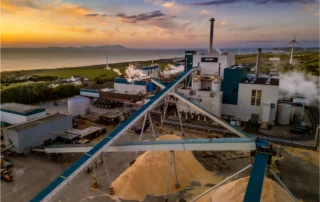
Holmen Workington increases sustainable power generation with HISS
Holmen Paper Mill in Workington, UK, identified an opportunity [...]

Interview with Hans Ladum-Poulsen, Heat Management’s newest representative
With many years of experience in the boiler and [...]
Pathways to ESG Success: Reducing Emissions with Data-Driven Boiler Optimization
June 2, 2026 /
The pressure is on. Investors, regulators, and the public are no longer just asking for sustainability reports; they are demanding verifiable proof of action. For plant managers and engineers, this isn’t a distant corporate goal—it’s a daily operational reality that directly impacts your budget, your performance, and your very license to operate.
The question is no longer if you should act on ESG, but how you can achieve measurable environmental gains without crippling your plant’s performance. The answer lies at the heart of your facility: the boiler. Often the single largest source of emissions, the boiler holds the key to unlocking a new level of efficiency, but traditional, reactive management is leaving that potential locked away.
This is your pathway to bridging that gap. We will show you how to transform your boiler from an emissions liability into a cornerstone of your ESG strategy. By leveraging data-driven optimization and intelligent cleaning technologies, you can directly lower fuel consumption, slash emissions, and secure a future of sustainable, high-impact performance.
The Inefficiency-Emissions Link: Why Boiler Performance is an ESG Priority
Here’s the brutal truth: every layer of soot and ash building up inside your boiler is actively working against your ESG goals. This fouling acts as an insulator, crippling heat transfer and forcing you to burn more fuel just to maintain the required steam output. According to the U.S. Department of Energy, this inefficiency can force 1-3% higher fuel use for every 1% drop in efficiency, directly increasing your CO₂, NOx, and SOx emissions.
But the damage doesn’t stop at CO₂. Inefficient combustion caused by poor cleaning also increases particulate matter (PM), a critical pollutant that impacts air quality and complicates regulatory compliance. The European Commission notes that in some industrial plants, fouling can increase fuel consumption by up to 8%, amplifying the entire spectrum of harmful emissions and putting you at odds with standards like the EU Emissions Trading System.
The core problem is a dangerous data gap. Managing your boiler based on calendar schedules and historical assumptions means you are flying blind. Inefficiencies grow unchecked between manual inspections, turning your most critical asset into an unpredictable ESG liability that threatens both your environmental targets and your bottom line.
The Data-Driven Approach: Shifting from Reactive to Predictive Optimization
What if you could see trouble coming before it hits? A data-driven approach gives you that foresight, transforming boiler management from a reactive guessing game into a predictive science. The foundation of this shift lies in continuously monitoring the vital signs of your boiler’s health.
Key performance indicators (KPIs) like flue gas temperatures, steam flow rates, pressure differentials, and heat transfer coefficients tell the true story of your boiler’s condition in real-time. According to a Deloitte report on industrial energy, leveraging this kind of data analytics in energy efficiency can boost boiler performance by 3-7%. This continuous stream of information closes the data gap, revealing fouling trends and operational deviations long before they become critical problems.
This is where advanced process analytics systems, like Heat Management’s Acospector™, become the “brain” of the operation. These systems don’t just collect data; they interpret it. By analyzing trends, they can identify specific areas of inefficiency, predict costly carryover events, and provide the actionable intelligence needed to maintain peak performance and achieve sustainable boiler performance.
Intelligent Technologies in Action: Turning Data into Emissions Reduction
Data is useless without action. Intelligent cleaning technologies are the “hands” of your optimization strategy, using the insights from process analytics to execute precise, effective cleaning that directly reduces emissions.
Optimized Sootblowing with HISS®
Are you still running your sootblowers on a timer? That outdated, calendar-based approach wastes enormous amounts of high-value steam and can even cause tube erosion. An intelligent, data-driven strategy, like our High Impact Sootblowing System (HISS®), uses real-time heat transfer data to activate cleaning sequences only where and when they are needed. This precision maintains optimal heat transfer, minimizing the excess fuel burn that drives up CO₂ emissions. As detailed in research from major boiler OEM Babcock & Wilcox, this optimized approach can reduce sootblowing steam consumption by up to 40%, lowering your plant’s overall energy intensity and carbon footprint.
Proactive Fouling Prevention with Infrasound Cleaning
The most effective way to fight fouling is to prevent it from starting. Infrasound cleaning technology generates low-frequency sound waves that create a continuous, gentle vibration on boiler surfaces. This prevents soot and ash particles from adhering and forming hard, insulating layers in the first place. By maintaining a consistently high level of cleanliness, the boiler operates at a higher baseline efficiency. This leads to sustained lower fuel consumption and stable, predictable emissions levels, a key component of achieving ESG compliance boiler optimization.
Mitigating Process Upsets with Carryover Early Warning
In recovery boilers, a black liquor carryover event can be catastrophic, causing severe fouling, forcing unplanned shutdowns, and leading to emission-intensive startups. Our patented early warning system uses real-time data to detect the conditions that precede a carryover event, giving operators a critical window to act. As noted by pulp and paper technology leader Valmet, preventing these upsets is crucial for minimizing downtime and avoiding the associated emissions spikes. This ensures stable, efficient, and compliant operation, protecting both your equipment and your environmental commitments.
Quantifying the Impact: The Tangible Results of Optimization
Ultimately, your ESG strategy must deliver measurable results. Data-driven boiler optimization provides clear, quantifiable returns that resonate in the control room and the boardroom.
The connection between efficiency and emissions is direct and powerful. A study from the National Renewable Energy Laboratory (NREL) found that a 2% improvement in boiler efficiency can translate to over 1,500 tons of CO₂ reduction annually for a typical biomass boiler. This is a hard number you can take to stakeholders to prove the impact of your investments.
Beyond direct fuel savings, optimizing your cleaning cycles reduces the auxiliary load on your plant. By cutting sootblowing steam consumption, you lower your overall energy intensity, another key metric for ESG reporting. The results are not theoretical; they are proven in the field. A PwC case study highlights a pulp and paper mill in Scandinavia that implemented a data-driven cleaning strategy and achieved a 4% reduction in natural gas consumption and a stunning 35% decrease in sootblowing steam usage. These are the kinds of outcomes that directly support corporate emissions reduction targets and demonstrate a real commitment to sustainability.
Conclusion: Your Pathway to Sustainable Industrial Performance
ESG success is not achieved through standalone initiatives or glossy annual reports. It is forged in the core of your industrial processes, where data and technology converge to create a new standard of performance. The journey from conventional, reactive maintenance to data-driven optimization is the most direct and impactful pathway to achieving significant industrial emissions reduction.
By transforming your boiler operation, you are not just cutting costs or improving efficiency—you are building a resilient, sustainable, and competitive future for your plant. You are proving that performance and purpose can, and must, go hand in hand. This is how you win.
Ready to build your data-driven optimization strategy? Explore how Heat Management’s process analytics and intelligent cleaning systems can help you meet your ESG goals. For a deeper technical analysis, download our guide on quantifying the ROI of optimized sootblowing.
Latest news & articles
Meeting EU Emissions Standards Through Advanced Steam Sootblowing Technologies
The walls are closing in. For plant managers and engineers [...]
Holmen Workington increases sustainable power generation with HISS
Holmen Paper Mill in Workington, UK, identified an opportunity [...]
Interview with Hans Ladum-Poulsen, Heat Management’s newest representative
With many years of experience in the boiler and [...]