

Reducing Operational Downtime: Innovative Predictive Maintenance Strategies for Boilers
April 1, 2026 /

What’s the one sound a plant manager truly fears? Silence. The sudden, unnerving quiet when a critical boiler goes offline without warning is more than an inconvenience—it’s a direct assault on your production schedule, your budget, and your peace of mind. For decades, the industry has been trapped in a costly cycle of reacting to failures or guessing with time-based preventive schedules, often performing maintenance that isn’t even necessary.
This old way of doing things is broken. Reactive maintenance is a chaotic, expensive scramble, while preventive maintenance is a shot in the dark, wasting precious resources and failing to stop unforeseen breakdowns. According to a report by Deloitte, unplanned downtime costs industrial manufacturers an estimated $50 billion annually, with asset failure being the cause nearly 42% of the time. But what if you could see the future? What if you could know a failure was coming days, or even weeks, before it happened?
This isn’t science fiction; it’s the reality of predictive maintenance (PdM). It’s a proactive strategy that leverages real-time data and advanced analytics to forecast equipment failures before they cripple your operations. This article will cut through the noise and explore the core technologies and practical strategies that transform boiler maintenance from a reactive cost center into a proactive driver of profitability and reliability.
The Foundation of Predictive Maintenance: Data & Analytics
Your boiler is constantly communicating. The subtle shifts in temperature, the faint changes in acoustic resonance, the microscopic alterations in fluid chemistry—these are all signals. The question is, are you equipped to listen? The foundation of any modern predictive maintenance program rests on gathering this high-fidelity data through advanced sensors and the Industrial Internet of Things (IIoT).
These aren’t your grandfather’s gauges. We’re talking about a network of sophisticated acoustic, thermal, pressure, and chemical sensors that act as the nervous system for your boiler. They provide a continuous stream of granular data, capturing the true operational health of your equipment in real time. This constant flow of information is the raw material for building a powerful predictive model, a concept explored in our guide on integrating sensor networks for enhanced boiler monitoring.
But data alone is just noise. The real magic happens when you apply the brain: machine learning in maintenance. Advanced algorithms sift through millions of data points, identifying subtle patterns and anomalies that are invisible to the human eye. This is how you detect the faint whisper of bearing wear or the earliest signs of deposit buildup long before they escalate into a full-blown operational crisis.
Strategy 1: From Scheduled Cleaning to Condition-Based Fouling Prevention
Boiler fouling is a silent thief. It slowly coats your heat transfer surfaces, strangling efficiency, driving up fuel consumption, and inevitably forcing a costly shutdown for manual cleaning. The traditional approach of cleaning on a fixed schedule—whether it’s needed or not—is fundamentally inefficient. It’s like mowing your lawn every Saturday, even in a drought.
The predictive solution flips this script entirely. Instead of guessing, you use real-time monitoring to understand the precise rate and location of deposit buildup. This allows you to deploy targeted, intelligent cleaning actions only when and where they are needed, a strategy that maximizes impact while minimizing waste. This shift from a time-based to a condition-based model is central to maximizing heat transfer efficiency with smart cleaning systems.
This is where innovative technology makes the strategy a reality. Non-intrusive systems like Infrasound Cleaning can be automatically triggered by data indicating the very first stages of particle accumulation, preventing significant buildup before it ever becomes a problem. For more stubborn deposits, a data-optimized HISS® (High Impact Sootblowing System) ensures maximum cleaning power with minimal steam consumption, a patented technology proven to improve plant efficiency and availability in demanding environments like pulp and paper recovery boilers.
Strategy 2: Early Warning Detection for Critical Process Upsets
Some failures don’t creep in; they explode. Catastrophic events like black liquor carryover in a recovery boiler represent a plant’s worst-case scenario, capable of causing severe damage, extended downtime, and unacceptable safety risks. By the time traditional alarm systems sound, the damage is often already done.
A predictive strategy doesn’t aim to react faster; it aims to act before the event ever occurs. By implementing systems that continuously analyze a wide range of process parameters, you can detect the unique chemical and physical precursors that signal an impending upset. This gives your operators a critical window—sometimes hours—to take corrective action and avert disaster entirely.
Heat Management’s patented Carryover Early Warning System is a prime example of this predictive power in action. It doesn’t just monitor for the event itself; it analyzes the conditions that lead to carryover, providing a true early warning. This transforms boiler management from a defensive posture to an offensive one, allowing you to mitigate boiler carryover risks before they materialize and secure your operational stability.
Strategy 3: Optimizing Process Control with Real-Time Fluid Analytics
What you can’t see can absolutely hurt you. Inefficient combustion, suboptimal fuel quality, or imbalanced process fluid chemistry are invisible saboteurs that accelerate equipment wear, reduce output, and contribute to fouling. These issues often go unnoticed until performance has already degraded significantly, forcing you to play catch-up.
The predictive answer is to make the invisible visible. By utilizing real-time analytics to continuously monitor the state of process fluids and combustion byproducts, you gain unprecedented insight into your boiler’s internal environment. This data empowers engineers to predict future maintenance needs and make immediate, fine-tuned adjustments to optimize performance and longevity.
This level of insight is enabled by technologies like Acospector™ Process Analytics. This non-invasive system provides a continuous, real-time “blood test” for your process, delivering the critical data needed for true real-time analytics for boilers. By integrating process analytics with boiler systems, you can fine-tune operations for peak efficiency, turning your boiler into a highly optimized, reliable asset.
Beyond Uptime: A Holistic View of ROI
The most obvious benefit of predictive maintenance is increased uptime, but the true return on investment goes much deeper. By shifting to a proactive model, you unlock a cascade of financial, operational, and environmental advantages. It’s not just about preventing failures; it’s about creating a more efficient, resilient, and profitable operation from the ground up.
First, consider operational efficiency. A clean, optimized boiler consumes less fuel and requires less auxiliary steam for processes like sootblowing. This translates directly into lower operating costs day after day. Furthermore, by eliminating unnecessary preventive tasks and avoiding catastrophic emergency repairs, you drastically reduce expenses for labor and spare parts, extending the lifespan of your critical boiler components.
Finally, these operational gains have a powerful impact on your company’s sustainability and ESG profile. Reduced energy consumption directly corresponds to a smaller carbon footprint, helping you meet increasingly stringent environmental regulations. In a world where 73% of investors state that ESG performance is pivotal to their investment decisions, demonstrating leadership in sustainable industrial energy management is no longer a bonus—it’s a competitive necessity.
The Future is Proactive, Not Reactive
The age of reactive maintenance is over. The transition from a traditional, failure-based mindset to a modern, predictive one is no longer an option for industrial plants—it is an imperative for survival and success. This evolution transforms maintenance from a necessary evil into a strategic driver of efficiency, reliability, and profitability.
The technology is here. The strategies are proven. With the right combination of advanced sensor technology, powerful data analytics, and intelligent cleaning systems, you can move beyond simply managing failures. You can prevent them entirely, securing your plant’s future and turning operational excellence into your greatest competitive advantage.
See how our Acospector™ Process Analytics provides the critical data for building a robust predictive maintenance strategy. Explore the technology here.
Latest news & articles

Meeting EU Emissions Standards Through Advanced Steam Sootblowing Technologies
The walls are closing in. For plant managers and engineers [...]
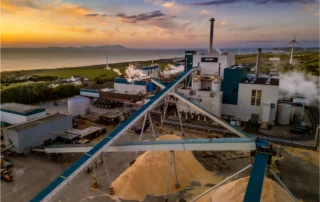
Holmen Workington increases sustainable power generation with HISS
Holmen Paper Mill in Workington, UK, identified an opportunity [...]

Interview with Hans Ladum-Poulsen, Heat Management’s newest representative
With many years of experience in the boiler and [...]
Reducing Operational Downtime: Innovative Predictive Maintenance Strategies for Boilers
April 1, 2026 /
What’s the one sound a plant manager truly fears? Silence. The sudden, unnerving quiet when a critical boiler goes offline without warning is more than an inconvenience—it’s a direct assault on your production schedule, your budget, and your peace of mind. For decades, the industry has been trapped in a costly cycle of reacting to failures or guessing with time-based preventive schedules, often performing maintenance that isn’t even necessary.
This old way of doing things is broken. Reactive maintenance is a chaotic, expensive scramble, while preventive maintenance is a shot in the dark, wasting precious resources and failing to stop unforeseen breakdowns. According to a report by Deloitte, unplanned downtime costs industrial manufacturers an estimated $50 billion annually, with asset failure being the cause nearly 42% of the time. But what if you could see the future? What if you could know a failure was coming days, or even weeks, before it happened?
This isn’t science fiction; it’s the reality of predictive maintenance (PdM). It’s a proactive strategy that leverages real-time data and advanced analytics to forecast equipment failures before they cripple your operations. This article will cut through the noise and explore the core technologies and practical strategies that transform boiler maintenance from a reactive cost center into a proactive driver of profitability and reliability.
The Foundation of Predictive Maintenance: Data & Analytics
Your boiler is constantly communicating. The subtle shifts in temperature, the faint changes in acoustic resonance, the microscopic alterations in fluid chemistry—these are all signals. The question is, are you equipped to listen? The foundation of any modern predictive maintenance program rests on gathering this high-fidelity data through advanced sensors and the Industrial Internet of Things (IIoT).
These aren’t your grandfather’s gauges. We’re talking about a network of sophisticated acoustic, thermal, pressure, and chemical sensors that act as the nervous system for your boiler. They provide a continuous stream of granular data, capturing the true operational health of your equipment in real time. This constant flow of information is the raw material for building a powerful predictive model, a concept explored in our guide on integrating sensor networks for enhanced boiler monitoring.
But data alone is just noise. The real magic happens when you apply the brain: machine learning in maintenance. Advanced algorithms sift through millions of data points, identifying subtle patterns and anomalies that are invisible to the human eye. This is how you detect the faint whisper of bearing wear or the earliest signs of deposit buildup long before they escalate into a full-blown operational crisis.
Strategy 1: From Scheduled Cleaning to Condition-Based Fouling Prevention
Boiler fouling is a silent thief. It slowly coats your heat transfer surfaces, strangling efficiency, driving up fuel consumption, and inevitably forcing a costly shutdown for manual cleaning. The traditional approach of cleaning on a fixed schedule—whether it’s needed or not—is fundamentally inefficient. It’s like mowing your lawn every Saturday, even in a drought.
The predictive solution flips this script entirely. Instead of guessing, you use real-time monitoring to understand the precise rate and location of deposit buildup. This allows you to deploy targeted, intelligent cleaning actions only when and where they are needed, a strategy that maximizes impact while minimizing waste. This shift from a time-based to a condition-based model is central to maximizing heat transfer efficiency with smart cleaning systems.
This is where innovative technology makes the strategy a reality. Non-intrusive systems like Infrasound Cleaning can be automatically triggered by data indicating the very first stages of particle accumulation, preventing significant buildup before it ever becomes a problem. For more stubborn deposits, a data-optimized HISS® (High Impact Sootblowing System) ensures maximum cleaning power with minimal steam consumption, a patented technology proven to improve plant efficiency and availability in demanding environments like pulp and paper recovery boilers.
Strategy 2: Early Warning Detection for Critical Process Upsets
Some failures don’t creep in; they explode. Catastrophic events like black liquor carryover in a recovery boiler represent a plant’s worst-case scenario, capable of causing severe damage, extended downtime, and unacceptable safety risks. By the time traditional alarm systems sound, the damage is often already done.
A predictive strategy doesn’t aim to react faster; it aims to act before the event ever occurs. By implementing systems that continuously analyze a wide range of process parameters, you can detect the unique chemical and physical precursors that signal an impending upset. This gives your operators a critical window—sometimes hours—to take corrective action and avert disaster entirely.
Heat Management’s patented Carryover Early Warning System is a prime example of this predictive power in action. It doesn’t just monitor for the event itself; it analyzes the conditions that lead to carryover, providing a true early warning. This transforms boiler management from a defensive posture to an offensive one, allowing you to mitigate boiler carryover risks before they materialize and secure your operational stability.
Strategy 3: Optimizing Process Control with Real-Time Fluid Analytics
What you can’t see can absolutely hurt you. Inefficient combustion, suboptimal fuel quality, or imbalanced process fluid chemistry are invisible saboteurs that accelerate equipment wear, reduce output, and contribute to fouling. These issues often go unnoticed until performance has already degraded significantly, forcing you to play catch-up.
The predictive answer is to make the invisible visible. By utilizing real-time analytics to continuously monitor the state of process fluids and combustion byproducts, you gain unprecedented insight into your boiler’s internal environment. This data empowers engineers to predict future maintenance needs and make immediate, fine-tuned adjustments to optimize performance and longevity.
This level of insight is enabled by technologies like Acospector™ Process Analytics. This non-invasive system provides a continuous, real-time “blood test” for your process, delivering the critical data needed for true real-time analytics for boilers. By integrating process analytics with boiler systems, you can fine-tune operations for peak efficiency, turning your boiler into a highly optimized, reliable asset.
Beyond Uptime: A Holistic View of ROI
The most obvious benefit of predictive maintenance is increased uptime, but the true return on investment goes much deeper. By shifting to a proactive model, you unlock a cascade of financial, operational, and environmental advantages. It’s not just about preventing failures; it’s about creating a more efficient, resilient, and profitable operation from the ground up.
First, consider operational efficiency. A clean, optimized boiler consumes less fuel and requires less auxiliary steam for processes like sootblowing. This translates directly into lower operating costs day after day. Furthermore, by eliminating unnecessary preventive tasks and avoiding catastrophic emergency repairs, you drastically reduce expenses for labor and spare parts, extending the lifespan of your critical boiler components.
Finally, these operational gains have a powerful impact on your company’s sustainability and ESG profile. Reduced energy consumption directly corresponds to a smaller carbon footprint, helping you meet increasingly stringent environmental regulations. In a world where 73% of investors state that ESG performance is pivotal to their investment decisions, demonstrating leadership in sustainable industrial energy management is no longer a bonus—it’s a competitive necessity.
The Future is Proactive, Not Reactive
The age of reactive maintenance is over. The transition from a traditional, failure-based mindset to a modern, predictive one is no longer an option for industrial plants—it is an imperative for survival and success. This evolution transforms maintenance from a necessary evil into a strategic driver of efficiency, reliability, and profitability.
The technology is here. The strategies are proven. With the right combination of advanced sensor technology, powerful data analytics, and intelligent cleaning systems, you can move beyond simply managing failures. You can prevent them entirely, securing your plant’s future and turning operational excellence into your greatest competitive advantage.
See how our Acospector™ Process Analytics provides the critical data for building a robust predictive maintenance strategy. Explore the technology here.
Latest news & articles
Meeting EU Emissions Standards Through Advanced Steam Sootblowing Technologies
The walls are closing in. For plant managers and engineers [...]
Holmen Workington increases sustainable power generation with HISS
Holmen Paper Mill in Workington, UK, identified an opportunity [...]
Interview with Hans Ladum-Poulsen, Heat Management’s newest representative
With many years of experience in the boiler and [...]